 Catalogue PIGMA
Ocean profiles
Type of resources
Available actions
Topics
Keywords
Contact for the resource
Provided by
Years
Formats
-
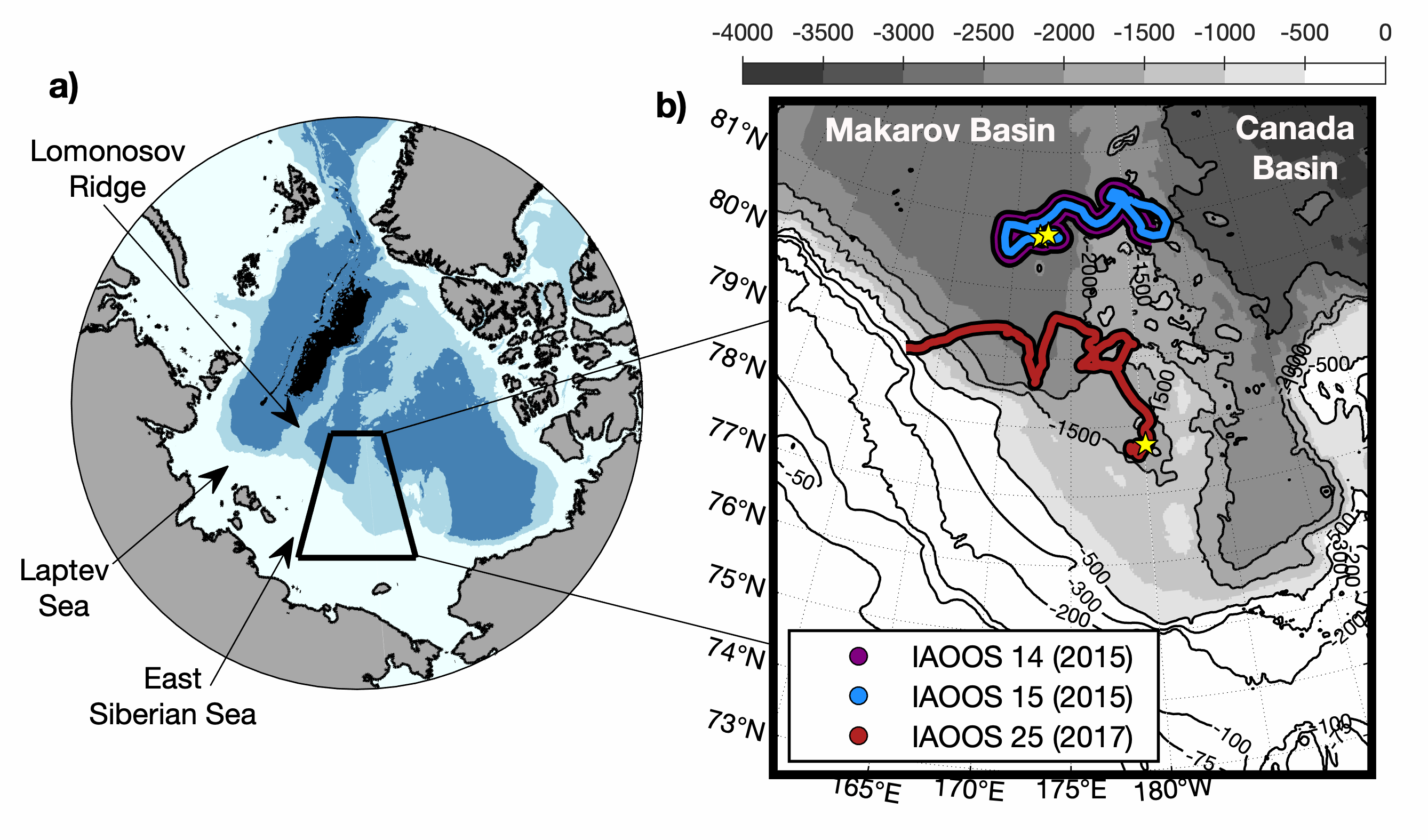
IAOOS14, IAOOS15 and IAOOS25 were deployed from the Korean Icebreaker R/V Araon during cruises in the northern Chukchi Sea. IAOOS14 and IAOOS15 were deployed 300 m apart on the same floe on 12 August 2015 in the Makarov Basin (80.8°N;173°E) and they drifted together remaining always less than 6 km apart. IAOOS25 was deployed on 15 August 2017 south-west Mendeleev Ridge (77.7°N;180°E) and drifted westward to the continental slope of the East Siberian Sea. IAOOS14 and IAOOS25 stopped transmitting on 9 October 2015 and 19 November 2017 respectively, likely due to the loss of their profilers while crossing relatively shallow bathymetry. IAOOS15 dataset ends in 15 October 2015. Ocean profilers were PROVOR SPI (from French manufacturer NKE) equipped with a Seabird SBE41 CTD (Conductivity, Temperature, Depth) and a dissolved oxygen (DO) Aandera 4330 optode. The profilers were set to perform two upward profiles a day from 800 m (IAOOS 14), 300 m (IAOOS 15) and 420 m (IAOOS 25), upward starting at approximately 6 am and 6 pm. The present dataset is composed of CTD-DO data from IAOOS 14 and 15, and CTD data from IAOOS 25 in the Makarov Basin, corrected from salinity errors and interpolated vertically every 0.5 m.
-
Arctic Western Eurasian Basin: IAOOS 23 and IAOOS 24 ocean CTD-DO, CDOM and nitrate profiles in 2017
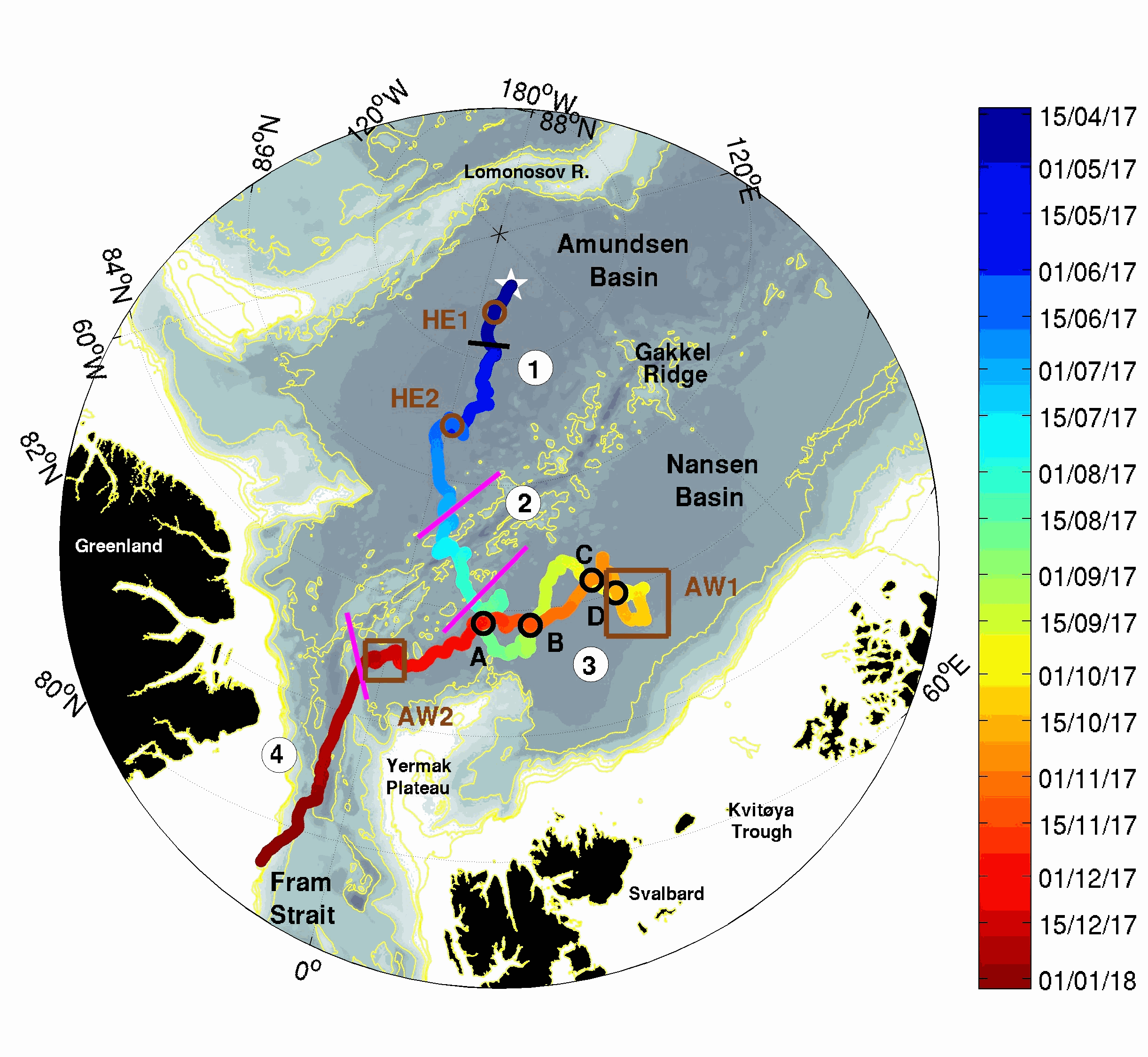
The two platforms IAOOS 23 and IAOOS 24 were deployed within 600 m from each other at the North Pole from the Russia-operated Barneo ice camp on April 12, 2017. They followed a meandering trajectory, reaching as far as 30°E in the Nansen Basin, before turning back to the western Fram Strait. On both IAOOS 23 and 24, the ocean profiler was a PROVOR SPI (from French manufacturer NKE) equipped with a Seabird SBE41 CTD (Conductivity, Temperature, Depth) and a dissolved oxygen (DO) Aandera 4330 optode. For the first time, the profiler on IAOOS 23 also carried biogeochemical sensors. It featured a bio-optics sensor suite and a submersible ultraviolet nitrate analyzer (SUNA, Satlantic-Seabird Inc.). The bio-optics sensor suite (called Pack Rem A) combines a three-optical-sensor instrument (ECO Triplet, WET Labs Inc.) and a multispectral radiometer (OCR-504, Satlantic Inc.). The present dataset is composed of CTD-DO data from IAOOS 23 and 24, corrected from the thermal lag and the sensor lag, despiked and interpolated vertically every 0.5 m. It also comprises nitrate concentrations from the SUNA and CDOM fluorescence from the WETLabs ECO sensor on IAOOS 23. Other biogeochemical data will be added to this dataset. The profilers were set to perform two upward profiles a day from 250 m (IAOOS 23) and 350 m (IAOOS 24) upward starting at approximately 6 am and 6 pm. They provided a unique 8-month long dataset, gathering a total of 793 profiles of the temperature, salinity and oxygen (upper 350m) and 427 profiles of CDOM and nitrates concentrations (upper 250m).
-
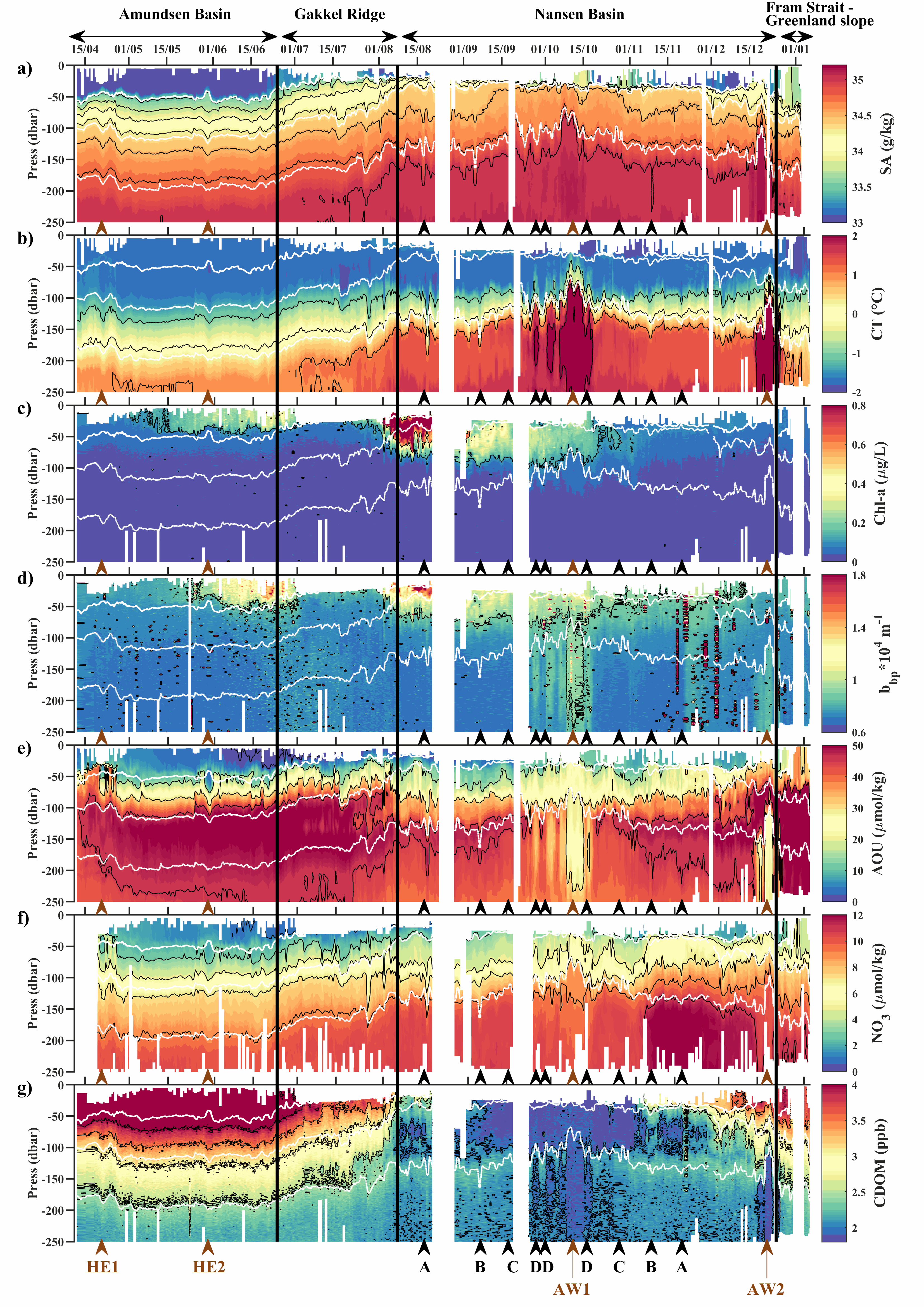
In April 2017, two Ice Atmosphere Arctic Ocean Observing System platforms (IAOOS 23 and IAOOS 24) were deployed near the North Pole. Over the next 8 months, they meandered southwards with the ice in the Transpolar Drift, collecting measurements in the upper 250 m of Amundsen Basin, Nansen Basin and Fram Strait. The ocean profilers are PROVOR SPI (from French manufacturer NKE), which includes a Seabird SBE41 CTD (Conductivity, Temperature, Depth) and a dissolved oxygen (DO) Aandera 4330 optode. IAOOS 23 also featured a bio-optics sensor suite and a submersible ultraviolet nitrate analyzer (SUNA, Satlantic-Seabird Inc.). The bio-optics sensor suite (called Pack Rem A) combines a three-optical-sensor instrument (ECO Triplet, WET Labs Inc.) and a multispectral radiometer (OCR-504, Satlantic Inc.). The present dataset is composed of chlorophyll-a fluorescence, backscatter, irradiances (at 412, 490 and 555 nm), photosynthetically active radiation (PAR), nitrate and colored-dissolved organic matter data from the IAOOS 23 platform, as well as composites of absolute salinity, conservative temperature and apparent oxygen utilization data from both profilers. The profilers were set to perform two upward profiles a day from 250 m starting at approximately 6 am and 6 pm. In this dataset, chlorophyll-a, PAR and irradiances were corrected with a shift to set dark values to zero. Nitrate was interpolated vertically every 5 m, and all other parameters were interpolated vertically every 0.5 m.