 Catalogue PIGMA
Svalbard
Type of resources
Available actions
Topics
Keywords
Contact for the resource
Provided by
Years
Formats
-
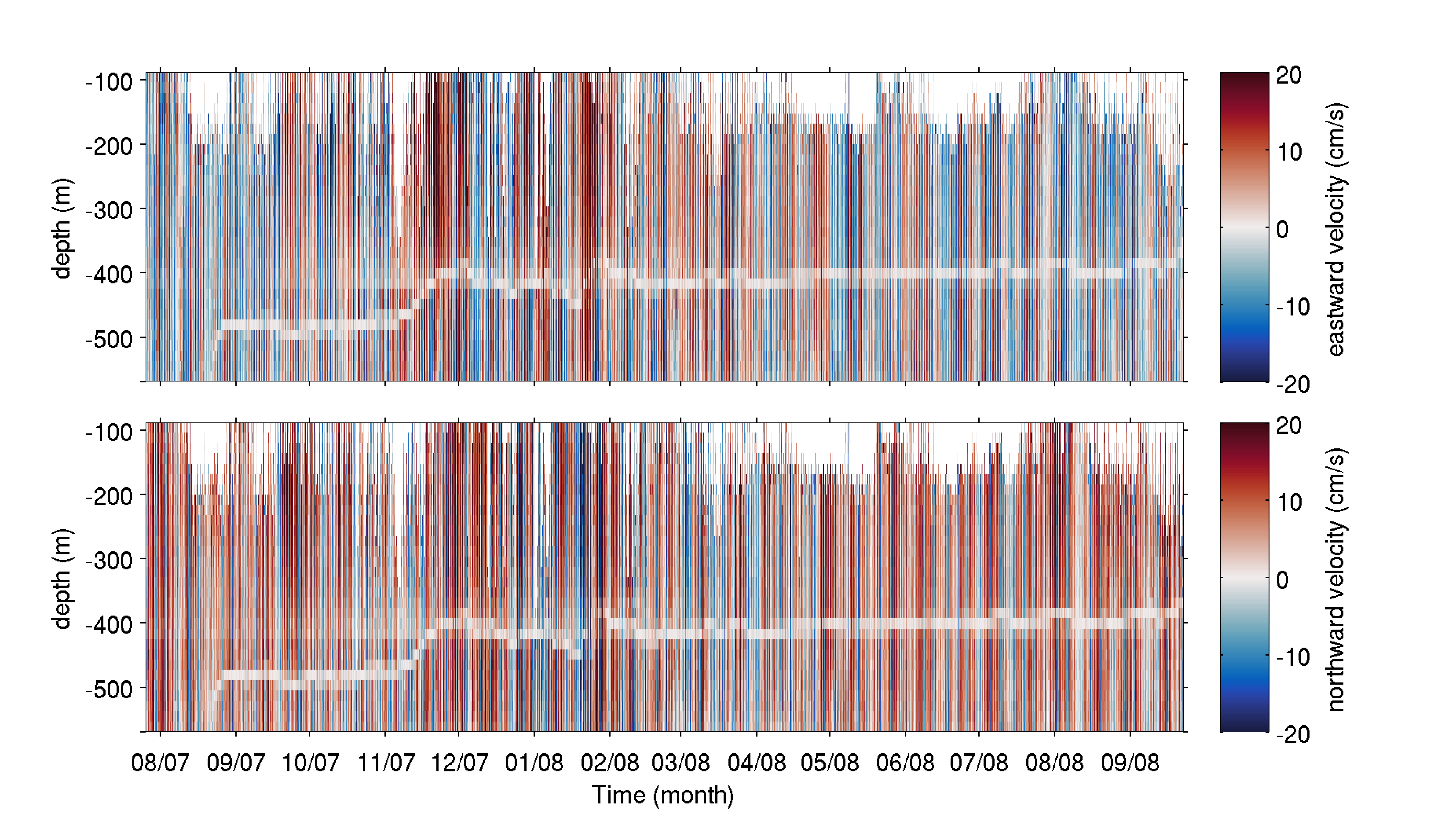
The mooring was deployed on 25 July 2007 from the R/V Haakon Mosby at 80.601°N, 7.119°E (depth of 745 m) in the Yermak Pass over the Yermak Plateau north of Svalbard. It comprised an upward-looking RDI 75kHz Long Ranger Acoustic Doppler Current Profiler (ADCP) at 585 m with 16 m vertical resolution and a 1hour sampling time, and an ocean profiler on a taut cable between 130 and 530 m. The mooring was recovered on 23 September 2008 by the K/V Svalbard. The dataset is composed of the raw data from the ADCP, after declination correction. A white shaded zone is visible in the data between 380 and 500 m depth throughout the time series. It corresponds to the reflection of the acoustic bins on the profiler stuck on the cable.
-
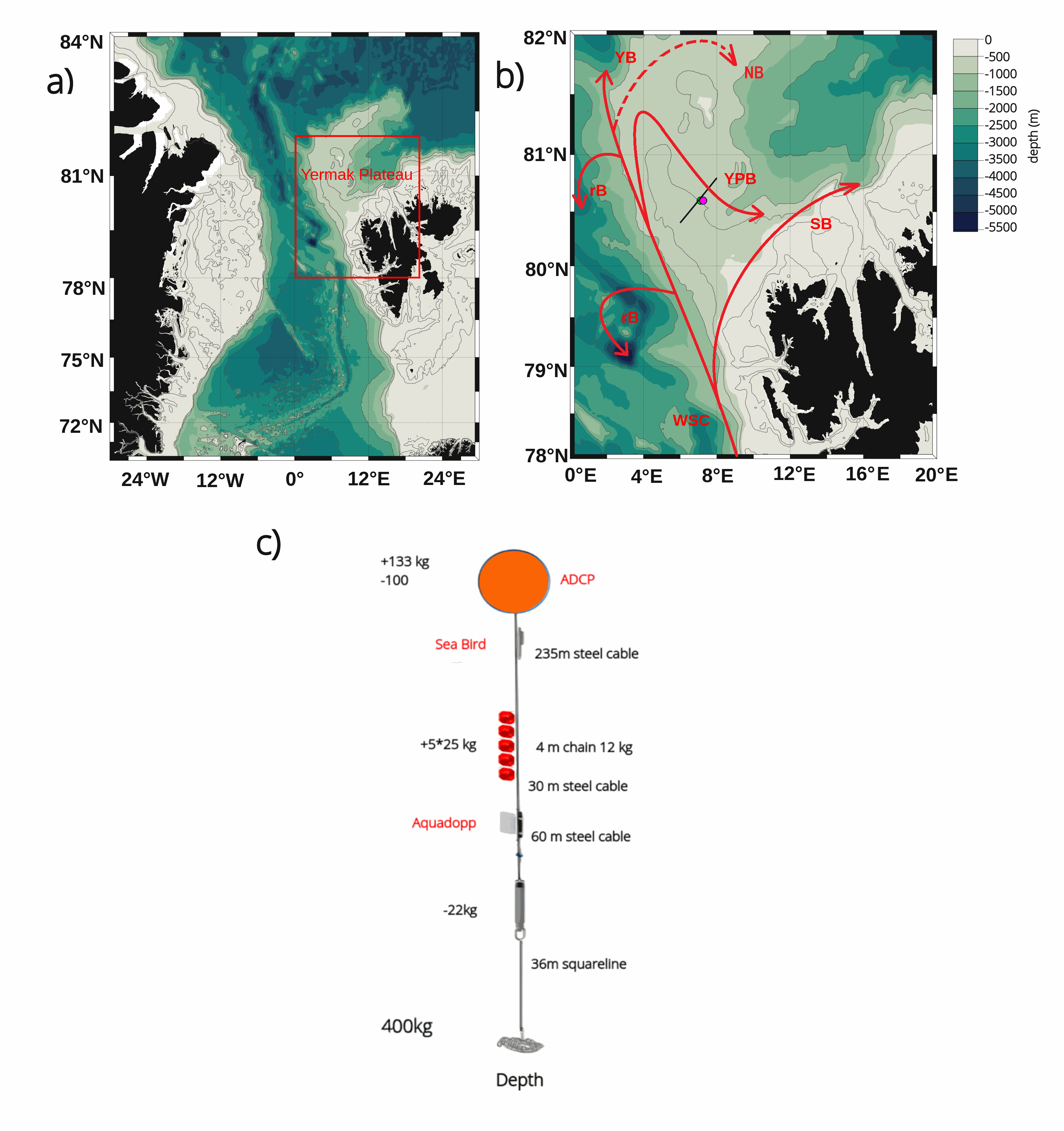
The mooring was deployed on 15 September 2017 from Norwegian Research Vessel Lance at 80.6°N and 7.26°E (depth of 730 m) in the Yermak Pass over the Yermak Plateau north of Svalbard. It comprised 3 instruments: an upward-looking RDI 75kHz, a Long Ranger Acoustic Doppler Current Profiler (ADCP) at 340 m with 16 m vertical resolution (25 bins of 16 m each) and a 2-hour sampling time; a Seabird SBE37 measuring temperature, salinity and pressure at 348 m with 10-minute sampling time; and an Aquadopp current meter at 645 m with a 2-hour sampling time. The mooring was retrieved on the 19 July 2020 by Norwegian Icebreaker K.V. Svalbard. The present dataset features: (i) the ADCP 50-hour smoothed daily velocities, conservative temperature and pressure time series interpolated every 10 meters within the 20-330m layer, (ii) the Aquadopp 50-hour smoothed daily velocities and pressure time series at 645 m; and (iii) the SBE37 50-hour smoothed daily conservative temperature, absolute salinity and pressure time series at 348 m.
-
Arctic marine protist communities have been understudied due to challenging sampling conditions, in particular during winter and in deep waters. The aim of this study was to improve our knowledge on Arctic protist diversity through the year, both in the epipelagic (< 200 m depth) and mesopelagic zones (200-1000 m depth). Sampling campaigns were performed in 2014, during five different months, to capture the various phases of the Arctic primary production: January (winter), March (pre-bloom), May (spring bloom), August (post-bloom) and November (early winter). The cruises were undertaken west and north of the Svalbard archipelago, where warmer Atlantic waters from the West Spitsbergen Current meets cold Arctic waters from the Arctic Ocean. From each cruise, station, and depth, 50 L of sea water were collected and the plankton was size-fractionated by serial filtration into four size fractions between 0.45-200 µm, representing the picoplankton, nanoplankton and microplankton. In addition vertical net hauls were taken from 50 m depth to the surface at selected stations. From the plankton samples DNA was extracted, the V4 region of the 18S rRNA-gene was amplified by PCR with universal eukaryote primers and the amplicons were sequenced by Illumina high-throughput sequencing. Sequences were clustered into Amplicon Sequence Variants (ASVs), representing protist genotypes, with the dada2 pipeline. Taxonomic classification was made against the curated Protist Ribosomal Reference database (PR2). Here we present the ASV table, metadata for the sequenced size-fractionated plankton samples, and environmental data from the corresponding water masses. Fastq-files with raw reads are available from the European Nucleotide Archive, under project accession number PRJEB40133.