 Catalogue PIGMA
/Ocean Waves/Significant Wave Height
Type of resources
Topics
Keywords
Contact for the resource
Provided by
Years
Formats
Representation types
status
Resolution
-
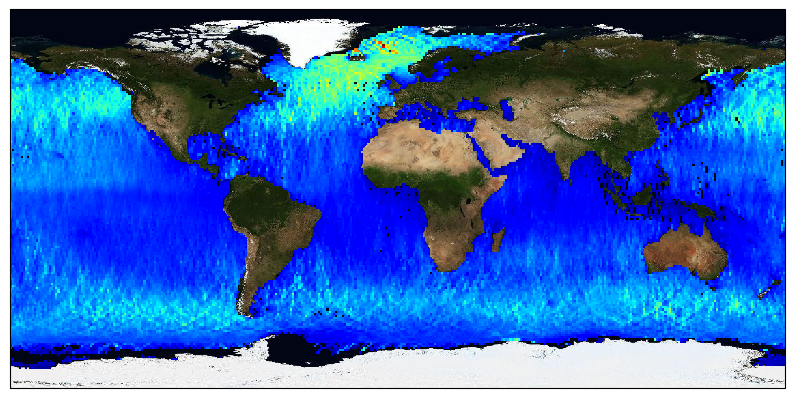
The ESA Sea State Climate Change Initiative (CCI) project has produced global multi-sensor time-series of along-track satellite altimeter significant wave height data (referred to as Level 4 (L4) data) with a particular focus for use in climate studies. This dataset contains the Version 3 Remote Sensing Significant Wave Height product, gridded over a global regular cylindrical projection (1°x1° resolution), averaging valid and good measurements from all available altimeters on a monthly basis (using the L2P products also available). These L4 products are meant for statistics and visualization. The altimeter data used in the Sea State CCI dataset v3 come from multiple satellite missions spanning from 2002 to 2021 ( Envisat, CryoSat-2, Jason-1, Jason-2, Jason-3, SARAL, Sentinel-3A), therefore spanning over a shorter time range than version 1.1. Unlike version 1.1, this version 3 involved a complete and consistent retracking of all the included altimeters. Many altimeters are bi-frequency (Ku-C or Ku-S) and only measurements in Ku band were used, for consistency reasons, being available on each altimeter but SARAL (Ka band).
-
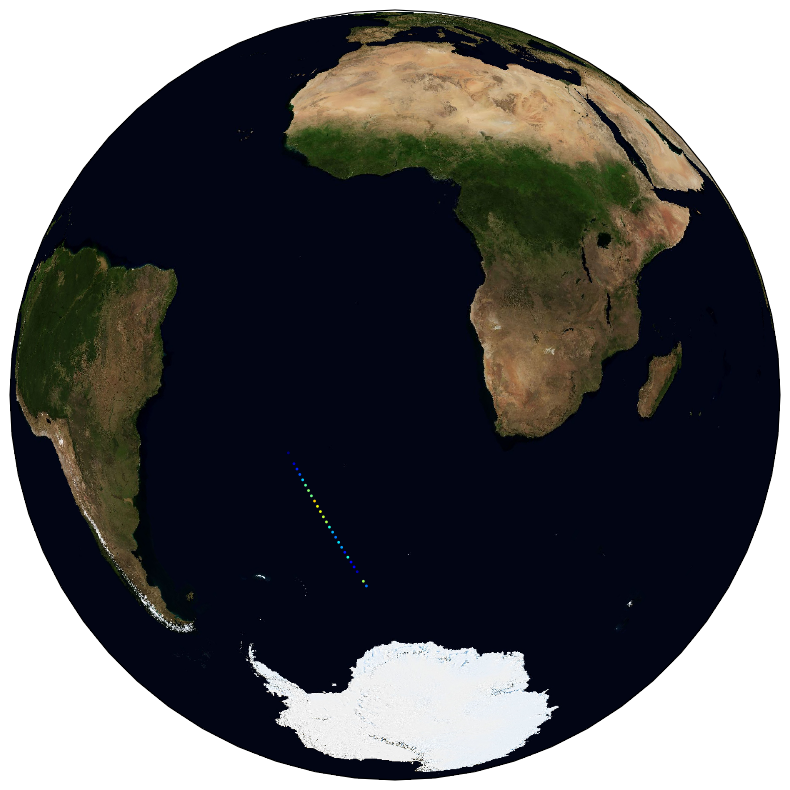
The ESA Sea State Climate Change Initiative (CCI) project has produced global multi-sensor time-series of along-track satellite synthetic aperture radar (SAR) integrated sea state parameters (ISSP) data from ENVISAT (referred to as SAR Wave Mode onboard ENVISAT Level 2P (L2P) ISSP data) with a particular focus for use in climate studies. This dataset contains the ENVISAT Remote Sensing Integrated Sea State Parameter product (version 1.1), which forms part of the ESA Sea State CCI version 3.0 release. This product provides along-track significant wave height (SWH) measurements at 5km resolution every 100km, processed using the Li et al., 2020 empirical model, separated per satellite and pass, including all measurements with flags and uncertainty estimates. These are expert products with rich content and no data loss. The SAR Wave Mode data used in the Sea State CCI SAR WV onboard ENVISAT Level 2P (L2P) ISSP v3 dataset come from the ENVISAT satellite mission spanning from 2002 to 2012.
-
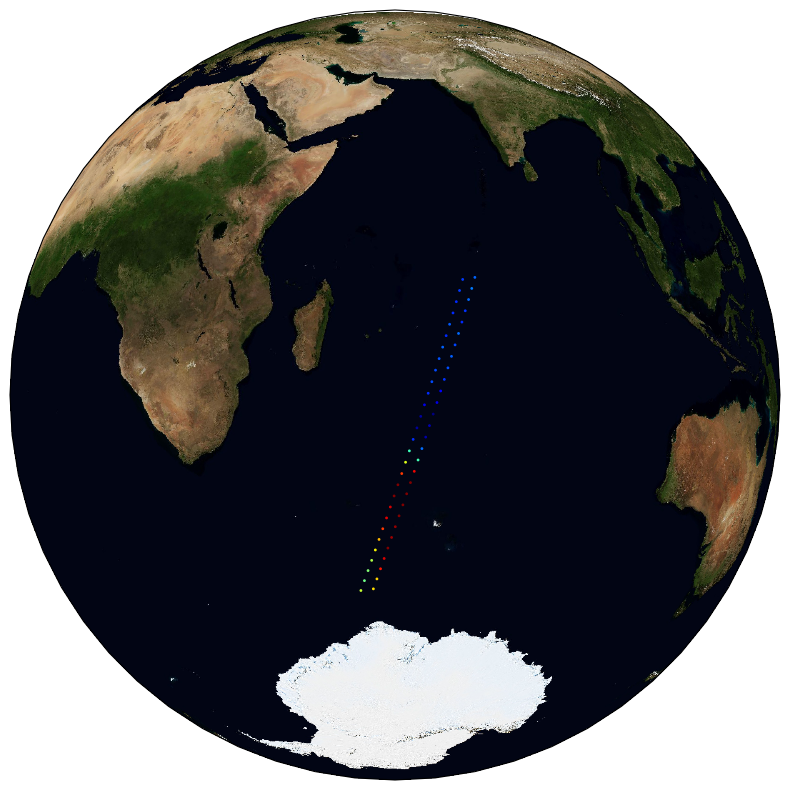
The ESA Sea State Climate Change Initiative (CCI) project has produced global multi-sensor time-series of along-track satellite synthetic aperture radar (SAR) significant wave height (SWH) data (referred to as SAR WV onboard Sentinel-1 Level 2P (L2P) SWH data) with a particular focus for use in climate studies. This dataset contains the Sentinel-1 SAR Remote Sensing Significant Wave Height product (version 1.0), which is part of the ESA Sea State CCI Version 3.0 release. This product provides along-track SWH measurements at 20km resolution every 100km, processed using the Quach et al statistical model , separated per satellite and pass, including all measurements with flags, corrections and extra parameters from other sources. These are expert products with rich content and no data loss. The SAR Wave Mode data used in the Sea State CCI dataset v3 come from Sentinel-1 satellite missions spanning from 2015 to 2021 (Sentinel-1 A, Sentinel-1 B).
-
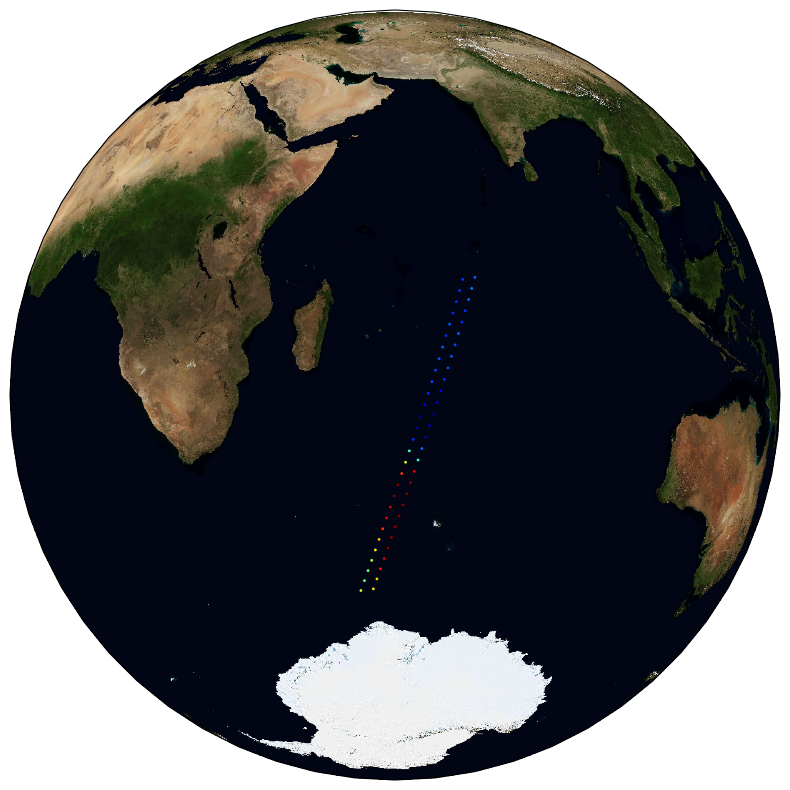
The ESA Sea State Climate Change Initiative (CCI) project has produced global multi-sensor time-series of along-track satellite synthetic aperture radar (SAR) integrated sea state parameters (ISSP) data from Sentinel-1 (referred to as SAR WV onboard Sentinel-1 Level 2P (L2P) ISSP data) with a particular focus for use in climate studies. This dataset contains the Sentinel-1 SAR Remote Sensing Integrated Sea State Parameter product (v1.0), which forms part of the ESA Sea State CCI version 3.0 release. This product provides along-track primary significant wave height measurements and secondary sea state parameters, calibrated with CMEMS model data and reference in situ measurements at 20km resolution every 100km, processed using the Pleskachevsky et. al., 2021 emprical model, separated per satellite and pass, including all measurements with flags and uncertainty estimates. These are expert products with rich content and no data loss. The SAR Wave Mode data used in the Sea State CCI SAR WV onboard Sentinel-1 Level 2P (L2P) ISSP v3 dataset come from the Sentinel-1 satellite missions spanning from 2014 to 2021 (Sentinel-1 A, Sentinel-1 B).
-
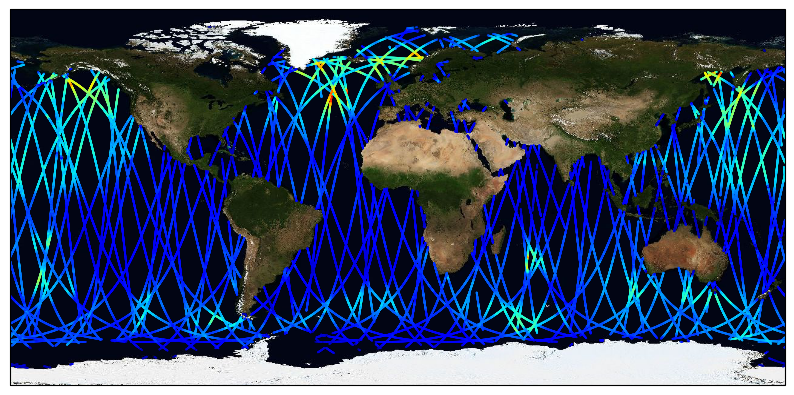
The ESA Sea State Climate Change Initiative (CCI) project has produced global daily merged multi-sensor time-series of along-track satellite altimeter significant wave height data (referred to as Level 3 (L3) data) with a particular focus for use in climate studies. This dataset contains the Version 3 Remote Sensing Significant Wave Height product, which provides along-track data at approximately 6 km spatial resolution. It has been generated from upstream Sea State CCI L2P products, edited and merged into daily products, retaining only valid and good quality measurements from all altimeters over one day, with simplified content (only a few key parameters). This is close to what is delivered in Near-Real Time by the CMEMS (Copernicus - Marine Environment Monitoring Service) project. It covers the date range from 2002-2021. The altimeter data used in the Sea State CCI dataset v3 come from multiple satellite missions (Envisat, CryoSat-2, Jason-1, Jason-2, Jason-3, SARAL, Sentinel-3A), therefore spanning over a shorter time range than version 1.1. Unlike version 1.1, this version 3 involved a complete and consistent retracking of all the included altimeters. Many altimeters are bi-frequency (Ku-C or Ku-S) and only measurements in Ku band were used, for consistency reasons, being available on each altimeter but SARAL (Ka band).
-

The ESA Sea State Climate Change Initiative (CCI) project has produced global multi-sensor time-series of along-track satellite altimeter significant wave height data (referred to as Level 2P (L2P) data) with a particular focus for use in climate studies. This dataset contains the Version 4 Remote Sensing Significant Wave Height product, which provides along-track data at approximately 6 km spatial resolution, separated per satellite and pass, including all measurements with flags, bias corrections and extra parameters from other sources. These are expert products with rich content and no data loss. The altimeter data used in the Sea State CCI dataset v4 come from multiple satellite missions spanning from 1992 to 2023 (ERS-1, ERS-2, Envisat, CryoSat-2, Jason-1, Jason-2, Jason-3, SARAL, Sentinel-3 A, Sentinel-3 B, Sentinel-6 A), therefore spanning over a larger time range than the previous version 3. The missions already retracked (with WHALES) in version 3 were not reprocessed, but extended when applicable. Many altimeters are bi-frequency (Ku-C or Ku-S) and only measurements in Ku band were used, for consistency reasons, being available on each altimeter but SARAL (Ka band). **The version 4 of this dataset now supersedes the previous version 3.**
-
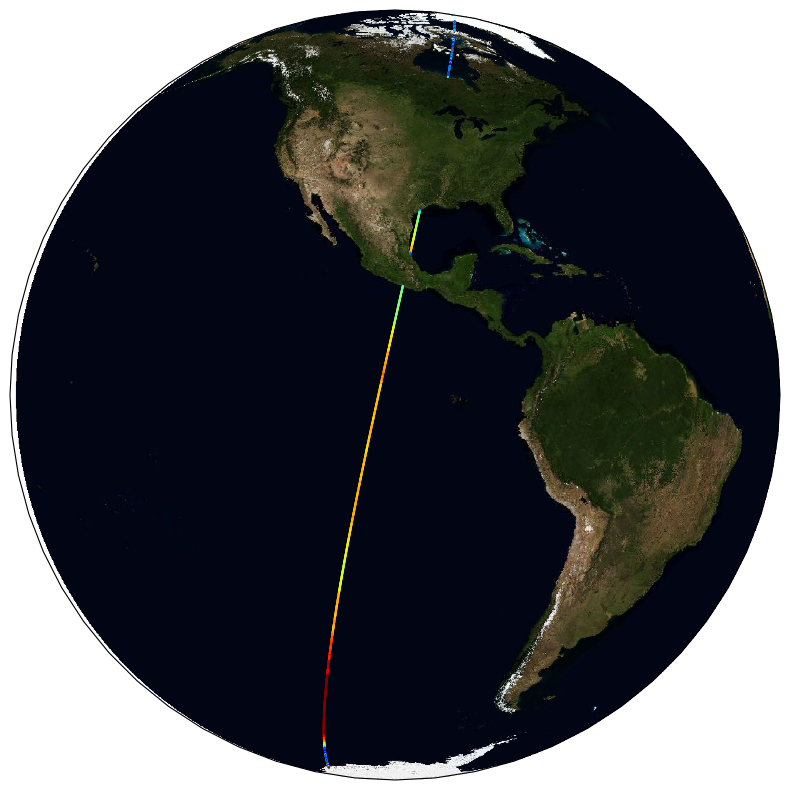
The ESA Sea State Climate Change Initiative (CCI) project has produced global multi-sensor time-series of along-track satellite altimeter significant wave height data (referred to as Level 2P (L2P) data) with a particular focus for use in climate studies. This dataset contains the Version 3 Remote Sensing Significant Wave Height product, which provides along-track data at approximately 6 km spatial resolution, separated per satellite and pass, including all measurements with flags, corrections and extra parameters from other sources. These are expert products with rich content and no data loss. The altimeter data used in the Sea State CCI dataset v3 come from multiple satellite missions spanning from 2002 to 2022021 (Envisat, CryoSat-2, Jason-1, Jason-2, Jason-3, SARAL, Sentinel-3A), therefore spanning over a shorter time range than version 1.1. Unlike version 1.1, this version 3 involved a complete and consistent retracking of all the included altimeters. Many altimeters are bi-frequency (Ku-C or Ku-S) and only measurements in Ku band were used, for consistency reasons, being available on each altimeter but SARAL (Ka band).
-

The ESA Sea State Climate Change Initiative (CCI) project has produced global daily merged multi-sensor time-series of along-track satellite altimeter significant wave height data (referred to as Level 3 (L3) data) with a particular focus for use in climate studies. This dataset contains the Version 4 Remote Sensing Significant Wave Height product, which provides along-track data at approximately 6 km spatial resolution. It has been generated from upstream Sea State CCI L2P products, edited and merged into daily products, retaining only valid and good quality measurements from all altimeters over one day, with simplified content (only a few key parameters). This is close to what is delivered in Near-Real Time by the CMEMS (Copernicus - Marine Environment Monitoring Service) project. It covers the date range from 1991-2023. The altimeter data used in the Sea State CCI dataset v3 come from multiple satellite missions (ERS-1, ERS-2,TOPEX-Poseidon, Envisat, CryoSat-2, Jason-1, Jason-2, Jason-3, SARAL, Sentinel-3 A, Sentinel-3 B, Sentinel-6 A), therefore spanning over a wider time range than previous version 3. The missions already retracked (with WHALES) in version 3 were not reprocessed, but extended when applicable. Many altimeters are bi-frequency (Ku-C or Ku-S) and only measurements in Ku band were used, for consistency reasons, being available on each altimeter but SARAL (Ka band). The version 4 of this dataset now supersedes the previous version 3.
-

The ESA Sea State Climate Change Initiative (CCI) project has produced global multi-sensor time-series of along-track satellite altimeter significant wave height data (referred to as Level 4 (L4) data) with a particular focus for use in climate studies. This dataset contains the Version 4 Remote Sensing Significant Wave Height product, gridded over a global regular cylindrical projection (1°x1° resolution), averaging valid and good measurements from all available altimeters on a monthly basis (using the L2P products also available). These L4 products are meant for statistics and visualization. The altimeter data used in the Sea State CCI dataset v3 come from multiple satellite missions spanning from 1992 to 2023 (ERS-1, ERS-2,TOPEX-Poseidon, Envisat, CryoSat-2, Jason-1, Jason-2, Jason-3, SARAL, Sentinel-3 A, Sentinel-3 B, Sentinel-6 A), therefore spanning over a wider time range than the previous version 3. The missions already retracked (with WHALES) in version 3 were not reprocessed, but extended when applicable. Many altimeters are bi-frequency (Ku-C or Ku-S) and only measurements in Ku band were used, for consistency reasons, being available on each altimeter but SARAL (Ka band).
-
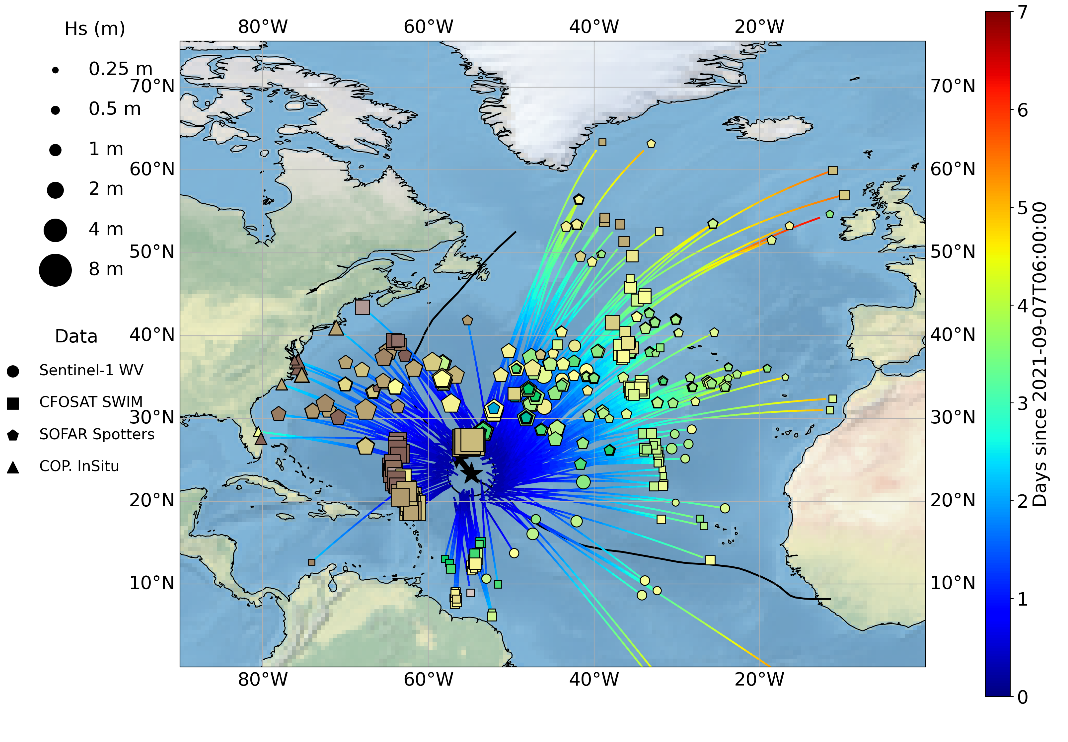
The main objectives of this dataset is to gather the ocean swells measured by different sensors, including satellite and in-situ sources, that were generated by a given tropical cyclone (TC). This dataset aims at providing characteristics of these swells such as their direction, wavelength (or period) and energy but also the date when they left the influence of the tropical cyclone wind to propagate freely. Wave spectra in tropical cyclones vary strongly per quadrant and provide information about the current and past state of the wave field. However, inside TCs, waves measurements including the wave system direction, energy and wavelength are rare and difficult to obtain with in-situ and remote sensing technics. For this dataset, both moored and drifting buoys are considered as long as they provide wave systems measurements. For the satellite contribution, Synthetic Aperture Radar (SAR) and real aperture radar (RAR) instruments can significantly contribute to the TC-generated waves documentation. Indeed, ocean wave spectra can be derived from modulations of the backscatter in SAR and RAR signal. SAR on board European satellite and in particular the SAR series developed since ERS-1 by ESA and now ESA/Copernicus with Sentinel-1 mission (S-1) are good candidates to provide these ocean waves systems characteristics thanks to the dedicated acquisition mode : the so-called Wave Mode. The wave spectrometer SWIM developed by the French space Agency (CNES) and embedded on the Chinese-French Oceanography SATellite (CFOSAT) has been launched more recently with a new measurement concept relying on a RAR and can certainly complement the S-1 data collection. Although the reasons are different, these two systems are limited for measuring waves generation area within the TC vortex where strong rain rates and wind regimes are observed. Far enough from their source, satellite acquisitions are thus expected to be able to observe these ocean swells during more favorable met-ocean conditions for waves retrieval inversion. As a consequence, our analysis is focused on waves originating from TC but that have been able to propagate far from their source. The analysis of swell measurements far from their area of generation to locate the storm source has been firstly applied to data from one single in-situ wave station (wave energy with frequency and direction) collected 2 miles off shore from San Clemente Island, California and extended to a network of several wave stations in the sixties. More recently, the gathering of swell system observed with SAR far from a storm to characterize the waves properties across the ocean has proven to be efficient in the case of extra-tropical storms. Yet, such analysis is not adapted to Tropical Cyclone whose size is much smaller and currently existing wave datasets do not allow for an accurate monitoring of the tropical cyclones swells. This multi-sensor Level-3 tropical cyclone waves dataset intends to fill this gap and opens for an alternate way of estimating tropical cyclone waves properties over all ocean basins and for all tropical cyclones. This dataset was produced in the frame of the ESA funded Marine Atmosphere eXtreme Satellite Synergy (MAXSS) project. The primary objective of the ESA Marine Atmosphere eXtreme Satellite Synergy (MAXSS) project is to provide guidance and innovative methodologies to maximize the synergetic use of available Earth Observation data (satellite, in situ) to improve understanding about the multi-scale dynamical characteristics of extreme air-sea interaction.