 Catalogue PIGMA
EMSO-Azores
Type of resources
Available actions
Topics
Keywords
Contact for the resource
Provided by
Years
Formats
-
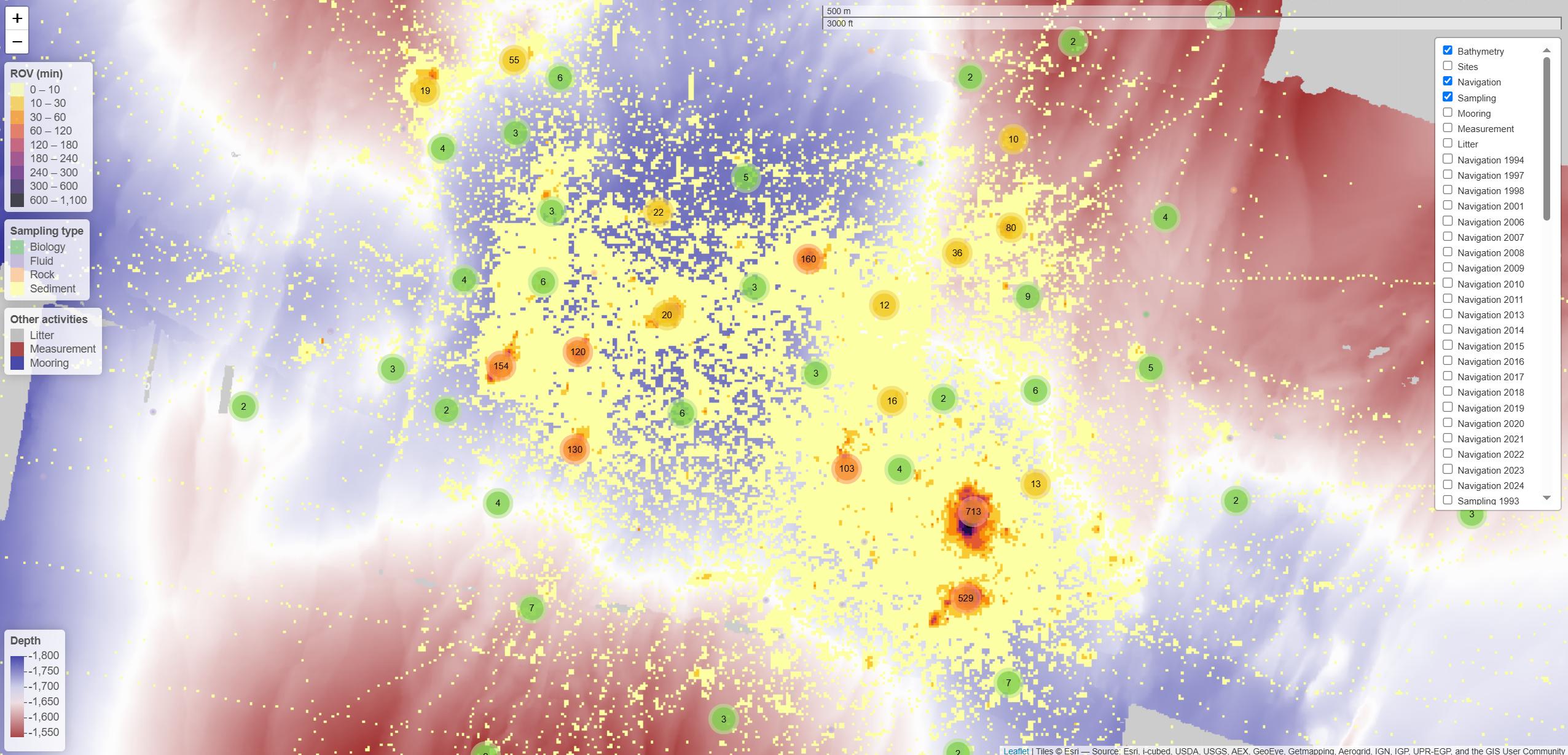
To assess the pressures exerted by scientific research at the Lucky Strike vent field, we compiled a comprehensive inventory of all research activities conducted from 1992 to 2024. These activities included sampling, in situ measurements, mooring deployments, submersible dives, and litter deposition on the seafloor. The type of sampling activities was identified (i.e., biological, rock, sediment, fluid) to evaluate their respective pressures. Litter assessments focused primarily on metallic deadweights, which are currently needed for submersible operations and mooring deployments. These include shuttles —a container deployed to facilitate instrumentation deployment/recovery and sample storage during dives— as well as instrumentation platforms such as the Seamon monitoring nodes, moorings and surface buoy. A census allowed an exhautive list of all available samples, moorings, submersible navigations and litter deposited on the seafloor. In addition, an interactive map allow the visualisation of all these activites, enabling filtration upon the year and type of activity. Rasters for all these activities are also made available (TIF) to be able to import these in GIS projects. In addition, R scripts are joined to analyse these data and compute an Integrated Research Pressure Index (IRPI) and the resulting database is made available in the repository. Temporal and spatial evolution analysis of the IRPI is also available in the scripts. A bibliometric database compiling all publications related to Lucky Strike until 2023 is also available along with a R script to analyse the temporal evolution of publications related to research efforts (IRPI).
-
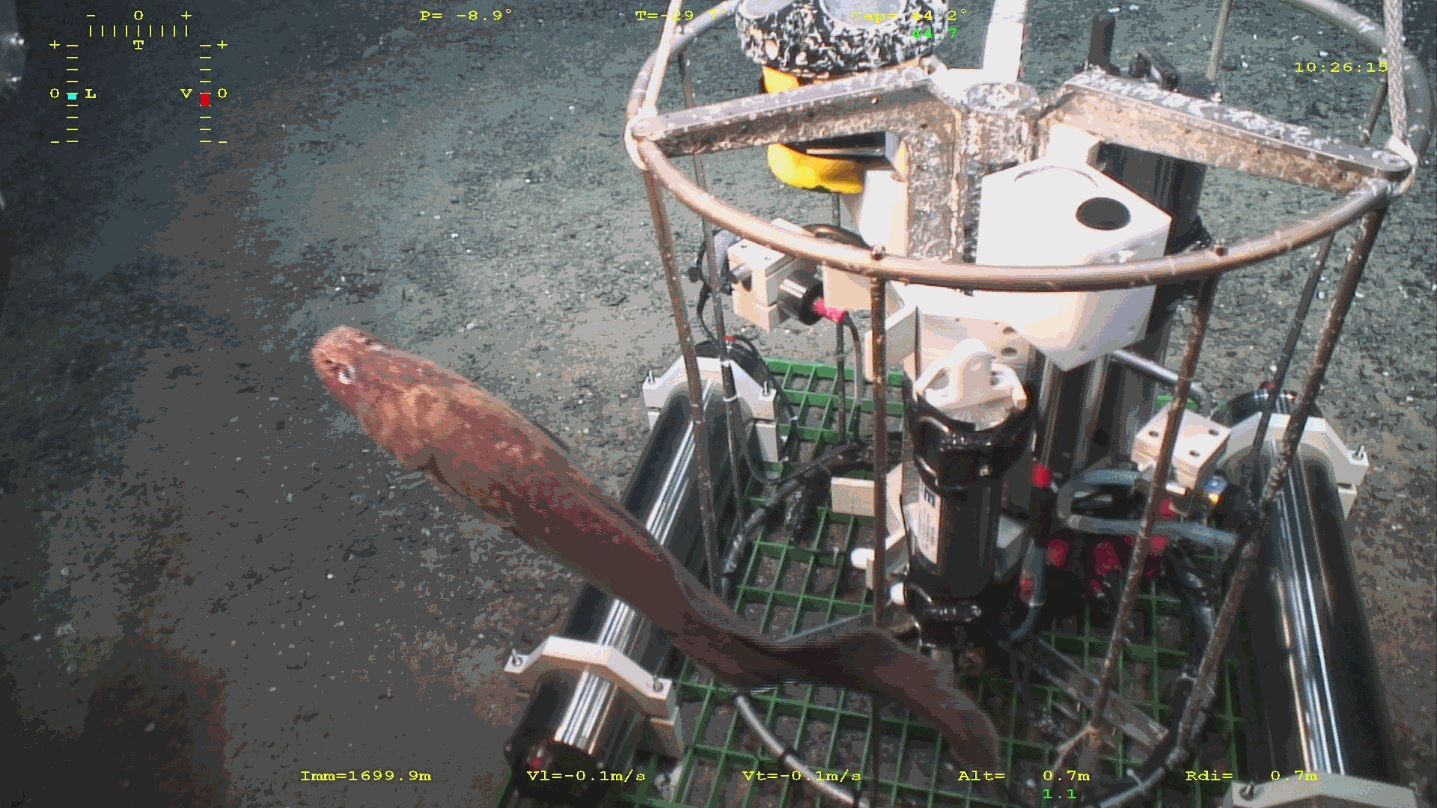
This dataset contains acoustic signal acquired between July 2017 and August 2018 on EMSO-Azores observatory by the EGIM. Acoustic signal is one of the 7 core parameters monitored by the EGIM, EMSO Generic Instrumental Module. The EGIM prototype was deployed at Lucky Strike hydrothermal vent site, 25 m south west of the active edifice Tour Eiffel, to monitor local hydrodynamic variability and complement the data obtained by the numerous sensors set on this site: oceanographic mooring deployed south of the vent field, the multidisciplinary Seamon East node, autonomous current meters, array of temperature probes…
-
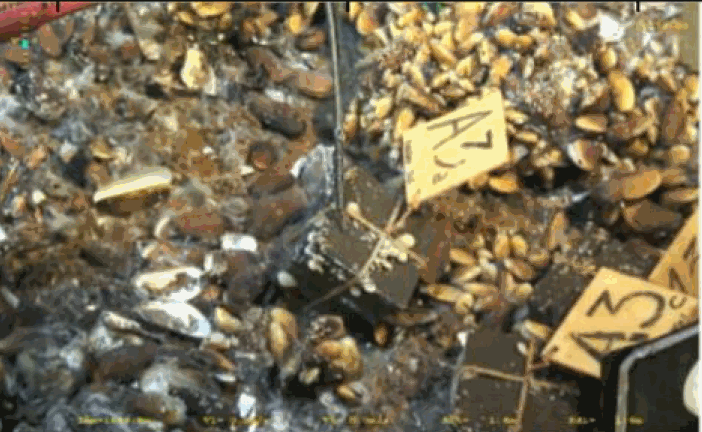
This dataset provides the abundance, functional traits and stable isotopes (δ13C, δ15N, and δ34S) of species colonizing slate- and wood-substrata blocks deployed along an hydrothermal vent gradient at and away from the Eiffel Tower edifice (~1,700m depth, Lucky Strike vent field, Mid-Atlantic Ridge). The present dataset is provided as an Excel file (.xls) and includes 6 sheets: information of colonizing blocks and environmental conditions (block_env sheet), species abundances (species_abundances), definitions of functional traits (trait_def sheet) and species functional traits (traits sheet), species stable isotopes (stable_isotopes sheet) and references associated with this dataset (reference sheet). Note that species abundances are given as the sum of individuals found in the macrofaunal compartment and the extrapolated abundances of individuals found on the meiofaunal compartment (see below for more details). Substrata consisted of size-standardized slate and wood blocks (10x10x10 cm) deployed for 2 years at four different “sites” characterized by a decreasing level of hydrothermal activity (“active,” “intermediate,” “periphery,” and “far”). In short, the active site is located near a vigorous venting activity on the Eiffel Tower edifice, the intermediate site is located further down on the western side of the edifice, in an area of diffuse flow. Both the active and intermediate sites are colonized by dense Bathymodiolus azoricus mussel beds. The periphery site is situated on a sedimentary area with no hydrothermal activity between the Eiffel Tower (~50 m) and Montségur edifices (~85 m). The far site is situated on a basaltic seabed with no hydrothermal activity on the west side of the Lucky Strike lava lake, at ~90, ~120, and ~470 m away from the Helen, Pico and Eiffel Tower active edifices, respectively. Three blocks of slate and wood were deployed at each of the four sites. Colonizing blocks were deployed during the MoMARSAT 2013 cruise, and recovered during the MoMARSAT 2015 both on board the R/V Pourquoi pas? using the ROV Victor6000. Blocks were washed with filtered seawater and sieved through 300- and 20-µm meshes. Sieved samples were sorted manually under a stereo microscope and all taxa were counted and identified to the lowest taxonomic level possible. The 300-µm samples were completely sorted. The 20-µm samples were transferred to 200-ml beakers and three subsamples of 5 ml each were taken from the original volumes. For each subsample, we identified individuals to the lowest possible taxonomic level and extrapolated the average number of individuals per subsample to the original sample volume, and summed to the 300-μm sample abundances. Three biological response traits related to energy availability and environmental stress, namely adult mobility, maximum body size and feeding strategy, each comprising several modalities, were measured and/or obtained from the literature for each species. The δ13C, δ15N and δ34S isotope ratios of 42 species were analyzed. More details of the study area, experimental setup, sample processing, species sorting and identification, functional traits and isotopes can be found in Alfaro-Lucas et al. Ecology (2020).
-
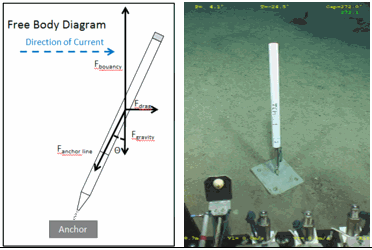
This dataset contains current data acquired between July 2017 and August 2018 using 3 TCM3 Ocean Bottom Tilt Current Meters installed next to the Tour Eiffel, Montségur and Crystal hydrothermal vent sites. The TCM-3 Ocean Bottom Tilt Current Meter from Lowell Instruments LLC (North Falmouth, MA, USA) measures current using the drag-tilt principle. The logger is buoyant and is anchored to the bottom via a short flexible tether. Drag from moving water tilts the logger in the direction of flow. The logger’s accelerometer and magnetometer channels are used to record the amount of tilt and direction of tilt (compass bearing). The array comprises 3 currentmeters, deployed near the Tour Eiffel, Montségur and Crystal hydrothermal vent sites. It is not connected to an energy node. The currentmeter's internal clocks are set to UTC time before deployment. Clock drift after recovery is not implemented in data but added as metadata in Table_TCM3EMSO_Azores 2016-2018.
-

This dataset contains current data acquired between july 2023 and august 2024 using 5 TCM-3 Ocean Bottom Tilt Current Meters installed next to the Tour Eiffel, hydrothermal vent site and near the SeaMon west station. The TCM-3 Ocean Bottom Tilt Current Meter from Lowell Instruments LLC (North Falmouth, MA, USA) measures current using the drag-tilt principle. The logger is buoyant and is anchored to the bottom via a short flexible tether. Drag from moving water tilts the logger in the direction of flow. The logger’s accelerometer and magnetometer channels are used to record the amount of tilt and direction of tilt (compass bearing). The currentmeter's internal clocks are set to UTC time before deployment. Clock drift after recovery is not implemented in data but added as metadata in metadata file. Data are provided for each deployed instrument as two text files: - current data - temperature data
-
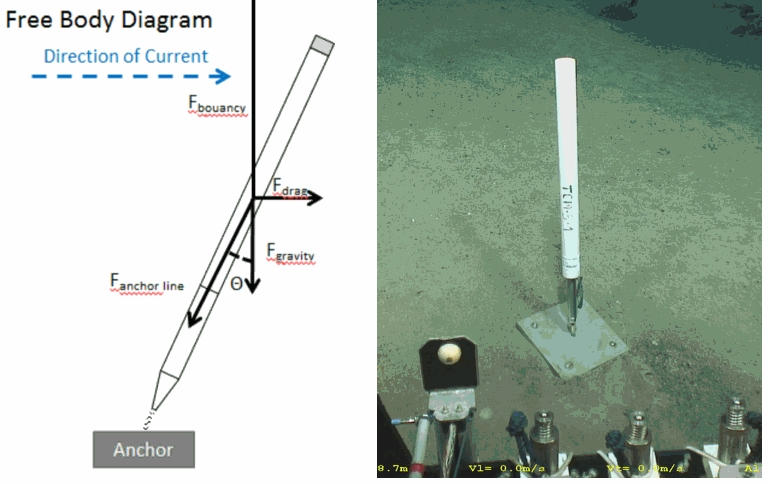
This dataset contains current data acquired between june 2022 and July 2023 using 5 TCM-3 Ocean Bottom Tilt Current Meters installed next to the Tour Eiffel, hydrothermal vent site and near the SeaMon west station. The TCM-3 Ocean Bottom Tilt Current Meter from Lowell Instruments LLC (North Falmouth, MA, USA) measures current using the drag-tilt principle. The logger is buoyant and is anchored to the bottom via a short flexible tether. Drag from moving water tilts the logger in the direction of flow. The logger’s accelerometer and magnetometer channels are used to record the amount of tilt and direction of tilt (compass bearing). The currentmeter's internal clocks are set to UTC time before deployment. Clock drift after recovery is not implemented in data but added as metadata in the meta data file. Data are provided for each deployed instrument as two text files: - current data - temperature data
-
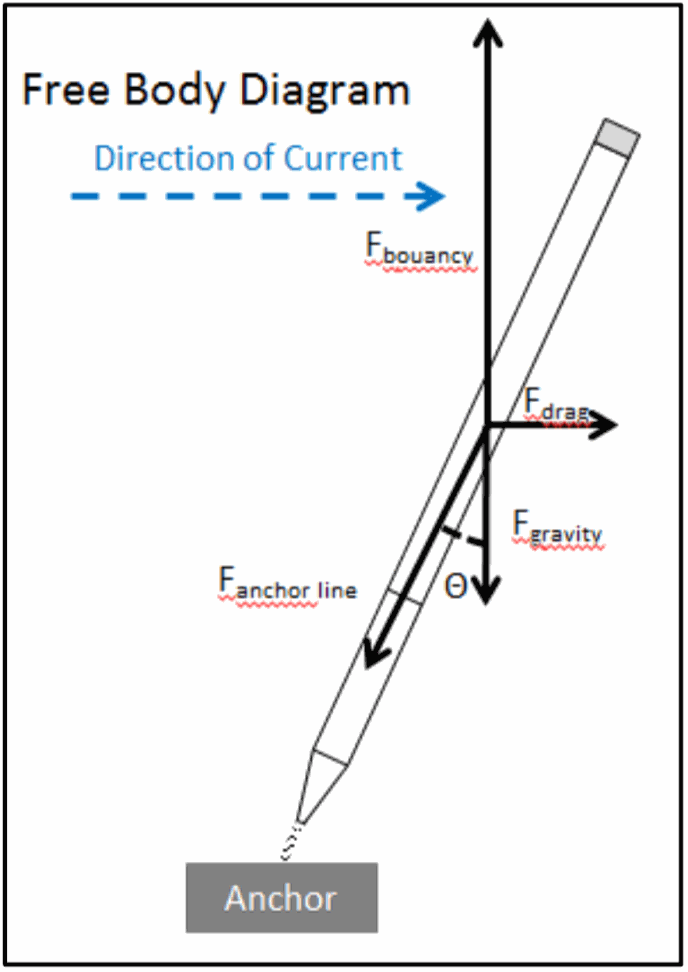
This dataset contains current data acquired between june 2021 and June 2022 using 5 TCM-3 Ocean Bottom Tilt Current Meters installed next to the Tour Eiffel, Montségur and Crystal hydrothermal vent sites. The TCM-3 Ocean Bottom Tilt Current Meter from Lowell Instruments LLC (North Falmouth, MA, USA) measures current using the drag-tilt principle. The logger is buoyant and is anchored to the bottom via a short flexible tether. Drag from moving water tilts the logger in the direction of flow. The logger’s accelerometer and magnetometer channels are used to record the amount of tilt and direction of tilt (compass bearing). The array comprises 6 TCM-3 currentmeters, deployed near the Tour Eiffel, Montségur and Crystal hydrothermal vent sites. It is not connected to an energy node. The currentmeter's internal clocks are set to UTC time before deployment. Clock drift after recovery is not implemented in data but added as metadata in the metadata file. Data are provided for each deployed instrument as two text files: - current data - temperature data
-
This dataset contains current data acquired between September 2016 and July 2017 using 2 TCM3 Ocean Bottom Tilt Current Meters installed next to the Tour Eiffel and Montségur hydrothermal vent sites. The TCM-3 Ocean Bottom Tilt Current Meter from Lowell Instruments LLC (North Falmouth, MA, USA) measures current using the drag-tilt principle. The logger is buoyant and is anchored to the bottom via a short flexible tether. Drag from moving water tilts the logger in the direction of flow. The logger’s accelerometer and magnetometer channels are used to record the amount of tilt and direction of tilt (compass bearing). The array comprised 3 currentmeters, deployed near the Tour Eiffel, Montségur and White Castle hydrothermal vent sites (the instrument at White Castle did not recover data). The array is not connected to an energy node. The currentmeter's internal clocks are set to UTC time before deployment. Clock drift after recovery is not implemented in data but added as metadata in the file "Sites and Sensor metadata".
-
This dataset contains current data acquired between Auguest 2018 and June 2019 using 3 TCM3 Ocean Bottom Tilt Current Meters installed next to the Tour Eiffel, Montségur and Crystal hydrothermal vent sites. The TCM-3 Ocean Bottom Tilt Current Meter from Lowell Instruments LLC (North Falmouth, MA, USA) measures current using the drag-tilt principle. The logger is buoyant and is anchored to the bottom via a short flexible tether. Drag from moving water tilts the logger in the direction of flow. The logger’s accelerometer and magnetometer channels are used to record the amount of tilt and direction of tilt (compass bearing). The array comprises 3 currentmeters, deployed near the Tour Eiffel, Montségur and Crystal hydrothermal vent sites. It is not connected to an energy node. The currentmeter's internal clocks are set to UTC time before deployment. Clock drift after recovery is not implemented in data but added as metadata in file Sensor Metadata.