 Catalogue PIGMA
Ocean Acoustics
Type of resources
Available actions
Topics
Keywords
Contact for the resource
Provided by
Years
Formats
-
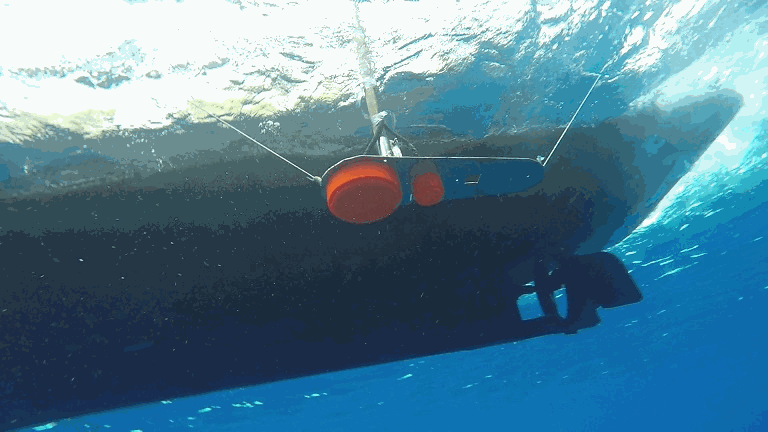
This dataset contains acoustic data collected around Fernando de Noronha Archipelago off northeast Brazil within the framework of Fish around Fernando de Noronha FAROFA surveys performed in sept 2017, April 2018 and April 2019.
-
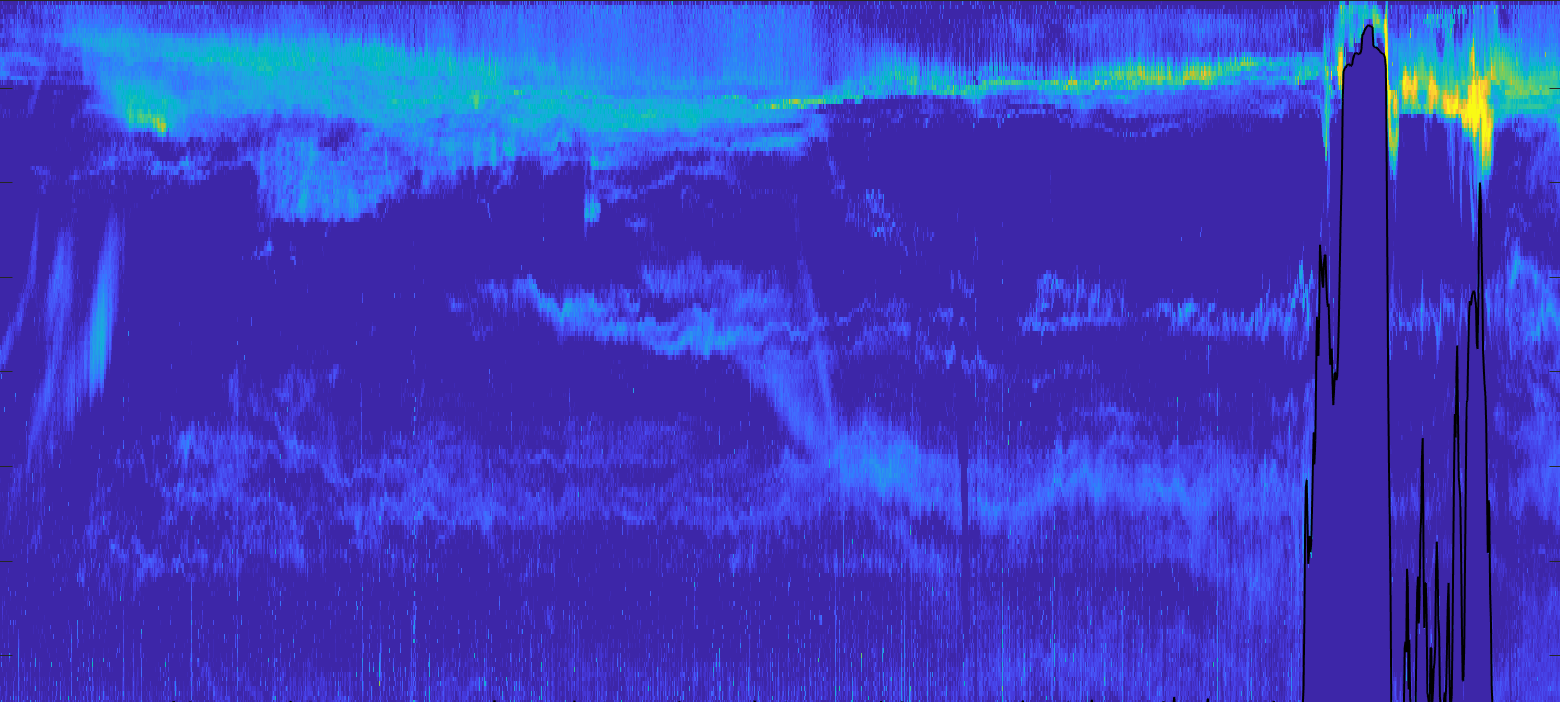
The ABRACOS (Acoustics along the BRAzilian COaSt) cruise aims to begin an integrated approach to monitoring the tropical marine ecosystems in the Brazilian Nordeste region in order to better understand the connectivity between the sub-systems composing it. In particular, this cruise should fill this gap and improve understanding of the degree of connectivity which exists between the oceanic islands and the continental margin in the Nordeste of Brazil, as well as within the continental platform. In this context, the main objective of the ABRACOS cruise consisted in drawing up a 3D characterization of abiotic and biotic compartments and their interactions in the Brazilian Nordeste.
-
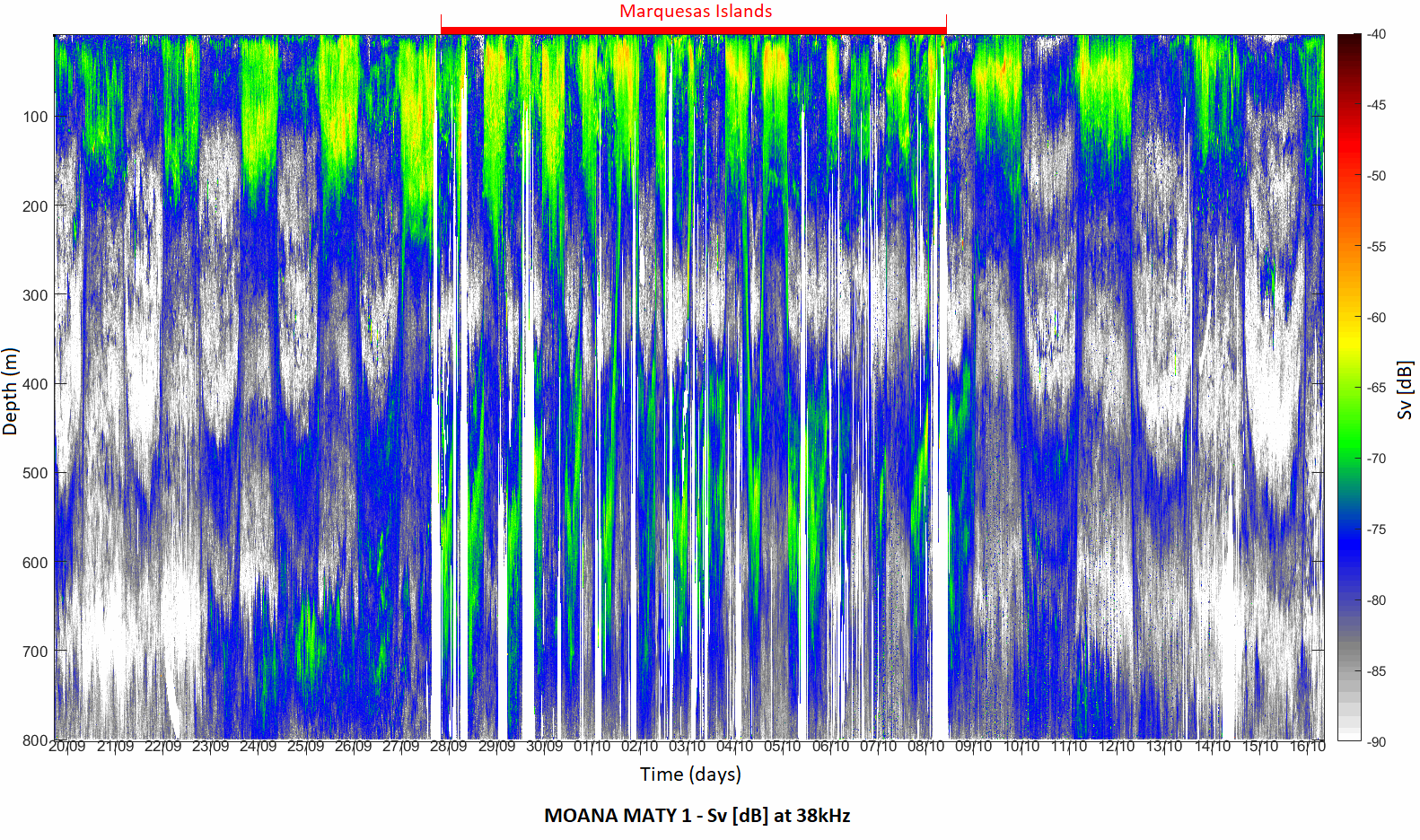
This dataset contains acoustic data collected with scientific echosounders in the West Pacific between Papeete and Marquesas Islands during cruises performed onboard the French R/V ALIS in 2018 and 2019 in the framework of the program «MOANA MATY».
-
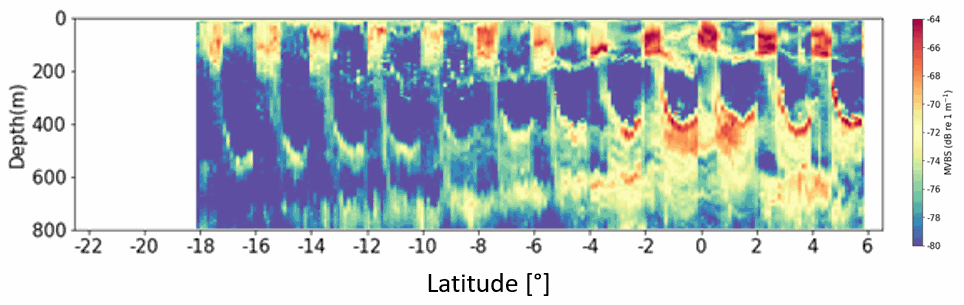
This dataset contains acoustic data collected with scientific echosounders in the West Pacific between Samoa Islands and French Polynesia during a cruise performed onboard the French R/V ALIS in 2022 in the framework of the program «MICROPAC». This work has received the financial support of the French ministry of the armed force.
-
This dataset contains acoustic data collected with scientific echosounders in the West Pacific between New-Caledonia, Micronesia and Papua New Guinea during a cruise performed onboard the French R/V ALIS in 2021 in the framework of the program «MICROPAC». This work has received the financial support of the French ministry of the armed force.
-
This dataset contains acoustic data collected with scientific echosounders around seamounts in the south of New-Caledonia during the Kanarecup cruise performed onboard the French R/V ALIS in 2021 in the framework of the program «KANADEEP».
-

This dataset contains acoustic data collected with scientific echosounders in the western and central Pacific in the equatorial area between French Polynesia and Papua New Guinea during a cruise performed onboard the French R/V ANTEA in 2023 in the framework of the program «MICROPAC». This work has received the financial support of the French ministry of the armed force.
-

This dataset presents raw acoustic data in WAV format (sampling frequency : 256 kHz) recorded onboard R/V L'Atalante on March 9, 2025, between 12:30 and 16:30 UTC, off the West coast of Guadeloupe (Cruise ESSTECH-AT-2025-1: ship radiated noise measurement). Ambient noise data recorded on an acoustic recorder submerged 40m below the surface include numerous sound emissions from marine mammals (sperm whales observed visually in the area, other odontocetes and probably distant humpback whales).
-
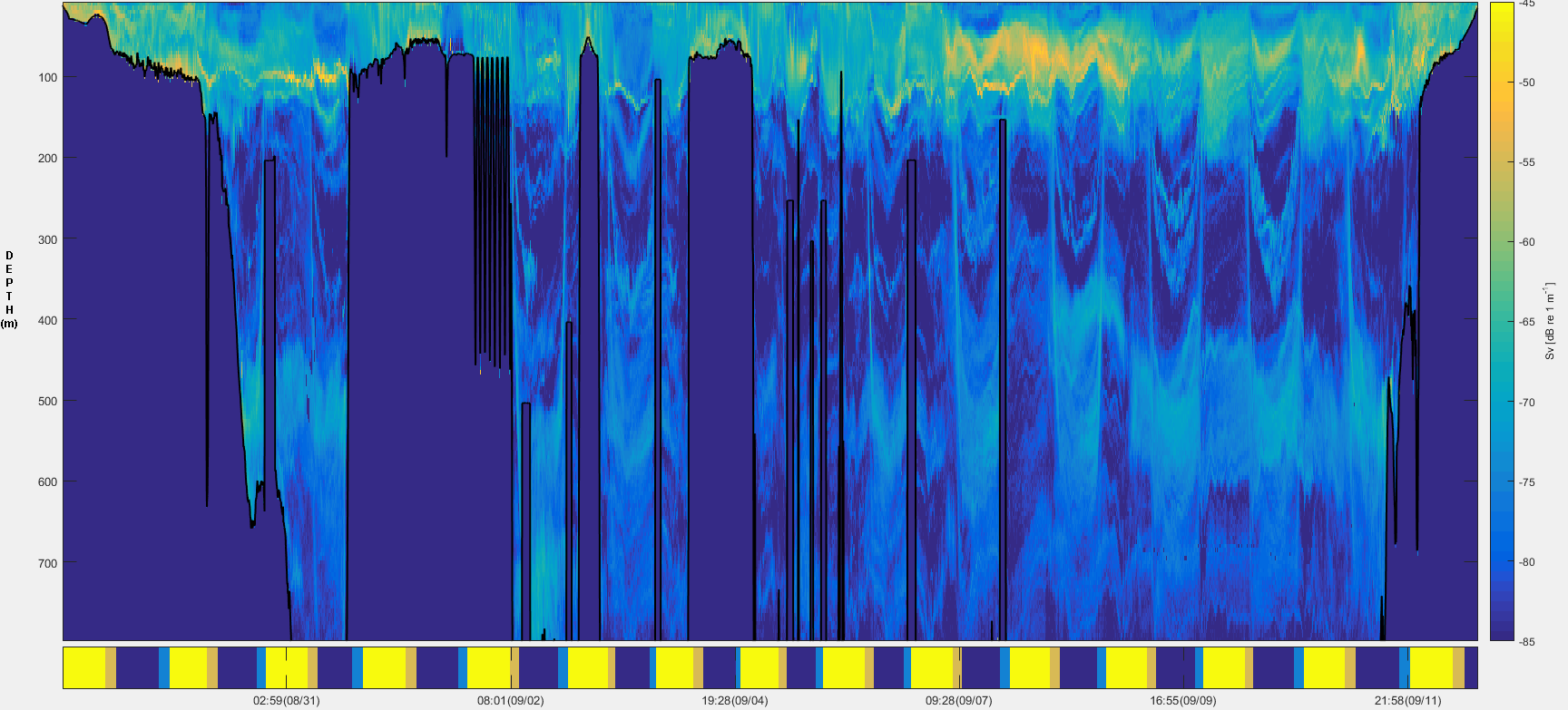
Entitled AMAZOMIX, this campaign traveled over the Amazonian shelf break and continental slope to study the impact of currents, the Amazon plume¹ and turbulent processes² on the structure and functioning of marine ecosystems from a physical, biogeochemical and biological point of view.
-
Physical data associated with the AMAZOMIX cruise. The Amazon shelf encompasses a variety of physical processes, such as fluvial inputs, coastal currents, mesoscale, filaments, tides, internal waves and upwelling, influencing nutrient concentrations, chlorophyll and suspended matter. They also affect energy, salt and heat balances; parameters that condition physical/biogeochemical interactions and ecosystem functioning, from bacteria to plankton to fish resources. In particular, internal tidal waves are very energetic in this region. They impact biogeochemical cycles via the vertical mixture induced by their dissipation or vertical movements induced by their propagation. They thus allow a significant input of nutriments into the euphotic layer enhancing primary production, as observed on the surface from watercolour data. Internal tidal waves could thus influence the biological pump and the carbon cycle. In addition, overall marine biodiversity of the region, from bacteria to fish is not well described. The connectivity of species in the tropical Atlantic is also still an open question. The Caribbean region is by far more bio-diverse than the Brazilian one. One of the hypotheses is that the Amazon plume, which can extend up to 3,000 km off the mouth, would constitute a barrier for some organisms. The Amazon Shelf is thus an ideal experimental laboratory to study the impact of physical processes on the structure and function of neritic and oceanic marine ecosystems. In this context, the objective of the multidisciplinary AMAZOMIX survey was to study the impact of the Amazon River plume, internal tides and associated turbulent mixing, on marine ecosystem in contrasting regions off the Amazon shelf. For that purpose, the multidisciplinary AMAZOMIX project brings together physicists, biogeochemists, bioopticians and biologists. The sampling strategy consists in the simultaneous acquisition of a comprehensive set of environmental and biological compartments, including micro-organisms (bacteria, phyto and zooplankton) and higher trophic levels (micronekton, demersal and pelagic fish). AMAZOMIX is the first campaign to develop this multi-disciplinary approach off the Amazon shelf. In situ results will be analysed in interaction with digital tools and data, modelling (1/36°, with and without tides, 1/12° coupled) and satellite data analyses. This dataset contains the AMAZOMIX 2021 qualified measurements of - The hydrographic CTD-02 (netCDF and csv text files) - Ship Acoustic Doppler Current Profilers (OS 75 kHz, netCDF and csv text files) - Lowered Acoustic Doppler Current Profilers (WH300 downlooking and WH300 uplooking, netCDF and csv text files) - Thermosalinometer (netCDF and csv text files) - Vertical microstructure profile (VMP-250, binary file)