 Catalogue PIGMA
IRD
Type of resources
Available actions
Topics
Keywords
Contact for the resource
Provided by
Years
Formats
Representation types
status
Resolution
-
The indiSeaS project is co-funded by the Intergovernmental Oceanographic Commission (IOC), the European Network of Excellence Euroceans, “'Institut de recherche pour le développement (IRD)” and the European project on Marine Ecosystem Evolution in a Changing Environment (MEECE). It is a multi-institutes collaborative effort. Scientific experts on ecosystems all over world calculate indicators and provide background information. The IndiSeas project aims at "Evaluating the status of marine ecosystems in a changing world”, using a set of different types of indicators to reflect the effects of multiple drivers on the states and trends of marine exploited ecosystems. It focuses on the effects of fishing, use of ecology, biodiversity, as well as climate and socio-economic indicators on world's marine ecosystems health. The objectives are to review IndiSeas datasets, present preliminary results to regional experts, discuss methods to be developed in each of the six task groups, establish work and publication plans for the future. Expertise from over 70 scientists, 49 research institutes and 36 countries.
-
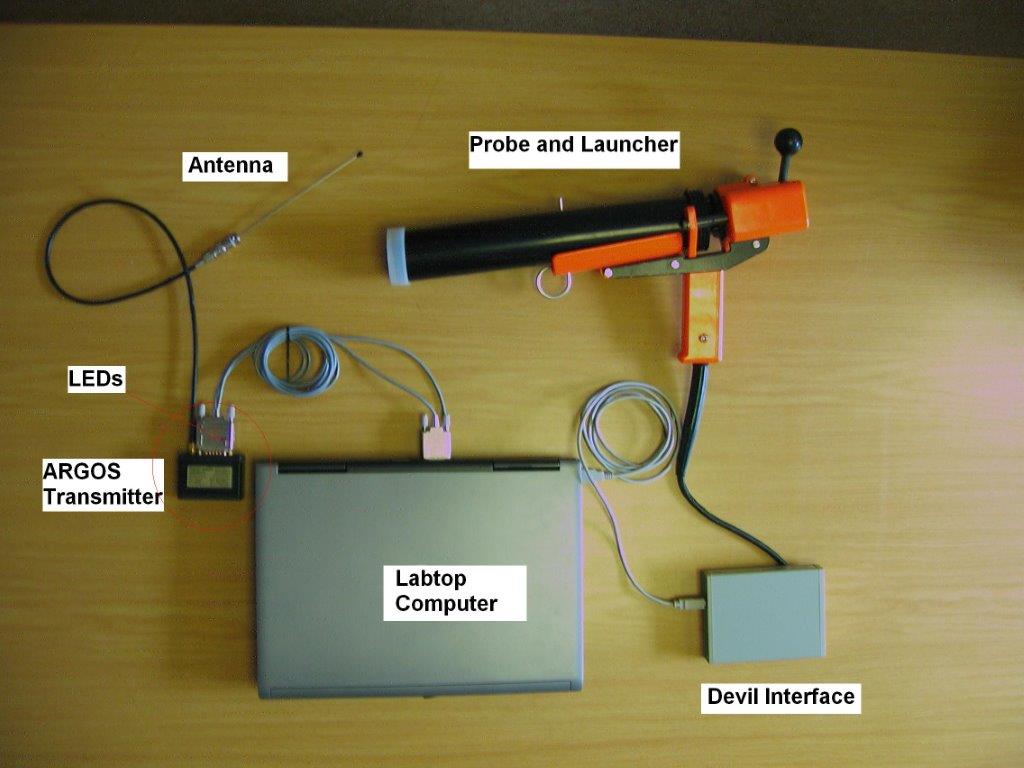
X : eXpendable; B : Bathy; T: Thermograph. Mesure de profil thermique en route avec émission en temps réel
-

Dart Seq data gathered on Blue Shark in the framework of the PSTBS-IO project supported by funding from FAO, CSIRO Oceans and Atmosphere, AZTI Tecnalia, Institut de recherche pour le développement (IRD), and Research Institute for Tuna Fisheries (RITF) and financial assistance of the European Union (GCP/INT/233/EC – Population structure of IOTC species in the Indian Ocean), and POPSIZE project supported by FEAMP (2014-2020 UE N°508/2014), and Institut français de recherche pour l'Exploitation de la mer (Ifremer).
-
This dataset contains libraries of 3 coral species: Acropora hyacinthus, Porites lobata and Poscillopora acuta. In three islands with contrasting thermal regimes, the three species were sampled and brought back to the laboratory to induce an experimental thermal stress. The different colonies were split into two conditions. One part was placed in tanks filled with seawater at a given control temperature, the other part in tanks where the water temperature was increased. The samples in this dataset correspond to part of the control condition samples from French Polynesia and New Caledonia.
-

The historical Seasonal Sargassum Forecast relies on the system described by Jouanno et al. (2023), operated by at the Laboratoire d’Etude en Géophysique et Océanographie Spatiale (LEGOS) and developed within ANR FORESEA and TOSCA SAREDA projects. This system relies on a mechanistic model of Sargassum populations, the NEMO-Sarg 1.0 model (Jouanno et al. 2021,2023, 2025), which integrates both transport and a physiology model of the macroalgae. The ensemble version of the Sargassum model at 1/4° horizontal resolution has been implemented and allows for the production of 7-month forecasts every month, initialized from Sargassum areal coverage near-real time estimates from the Moderate Resolution Imaging Spectroradiometer MODIS (Berline & Descloitres, 2021). The operational Seasonal Sargassum Forecasts (September 2025 – on going) are produced globally by Mercator Ocean International, building on the same mechanistic NEMO-Sarg 1.0 configuration (Jouanno et al., 2021, 2023, 2025, see details in 2.1). Sargassum biomass is initialized each month using near-real-time estimates derived from OLCI satellite observations (DOI: 10.24400/527896/a01-2022.007), providing an up-to-date representation of surface concentrations. This global operational framework thus complements the IRD regional setup and extends forecasting capability across the entire Atlantic basin. More details on both processing are available in the user manual.