 Catalogue PIGMA
environment
Type of resources
Available actions
Topics
Keywords
Contact for the resource
Provided by
Years
Formats
Representation types
Update frequencies
status
Scale
Resolution
-
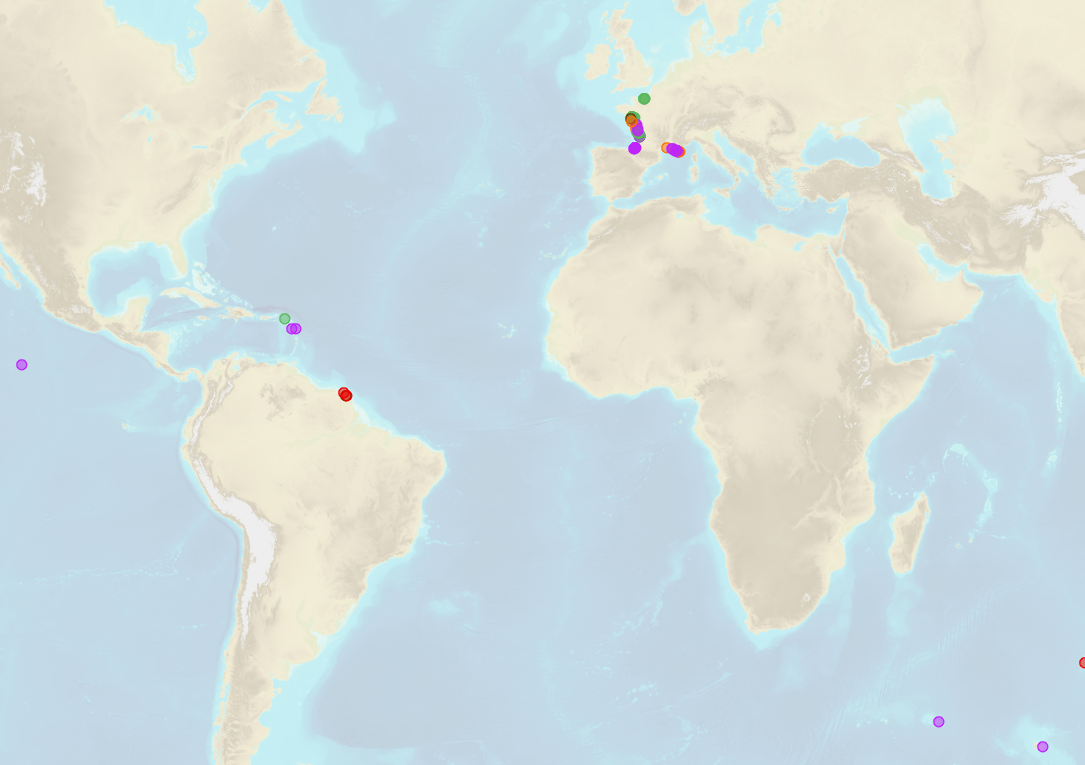
Shom is the national referent for the level of the sea in situ on all areas under French jurisdiction. In this capacity, he assures under the acronym REFMAR different coordination functions in the collection and dissemination of public data related to water level observations, in order to promote their use in multiple applications within the framework of international recommendations.
-
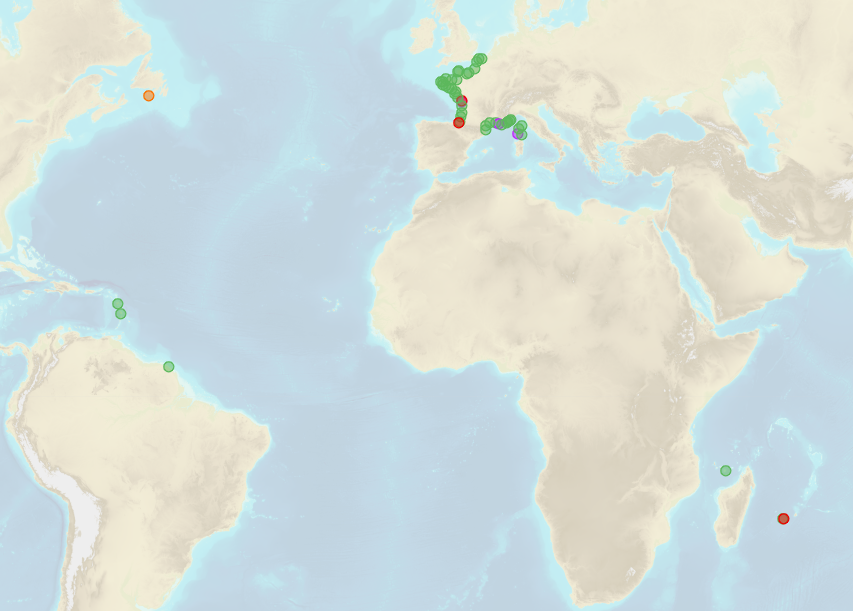
Shom manages a network of permanent digital coastal tide-gauges on French coasts: the RONIM Sea Level Observation Network. Most tide-gauge observatories are partnered with one or more local partners.<br /><br /> Four main types of data are available for download:<br /> - “Raw high frequency" data: raw observations neither validated nor evaluated, obtained directly from the sensor. 1-minute measurement; integration time 15 seconds (on the minute); sampling period: 1 second.<br /><br /> - "Raw non-real time" data: raw observations neither validated nor evaluated, obtained directly from the sensor. 10-minute measurement; integration time 121 seconds (around every 10 minutes); sampling period: 1 second.<br /><br /> - "Validated non-real time" data: observations checked and validated by Shom from the "Raw non-real time" data. 10-minute measurement; integration time 121 seconds (around every 10 minutes); sampling period: 1 second.<br /><br /> - "Validated hourly" data: observations checked and validated by Shom, generated from "Validated non-real time" data. Hourly measurement obtained from the Vondrak filter with triangular weighting. The hourly height cannot be calculated in the event of an observation gap greater than 1.5 hours.
-

Suivi de la mégafaune des herbiers à grande zostère (Zostera marina).
-
Le Plan de Prévention du Bruit dans l'Environnement (PPBE) regroupe les données relatives à l'exposition des populations aux nuisances sonores. Ces couches permettent d'identifier et de cartographier les zones concernées par différents niveaux de bruit issus des principales sources de nuisances : trafic routier, ferroviaire, aérien et activités industrielles. Les données sont généralement produites dans le cadre de la réglementation européenne et nationale sur l'évaluation et la gestion du bruit dans l'environnement. Elles servent à informer le public, à orienter les politiques d'aménagement du territoire et à mettre en œuvre des actions visant à réduire l'exposition au bruit. **Couches associées :** * PPBE : Aéroport * PPBE : Axe principal * PPBE : Axe principal nuit (Lnight) * PPBE : Chemin de fer * PPBE : Chemin de fer nuit (Lnight) * PPBE : Industrie * PPBE : Industrie nuit (Lnight) * PPBE : Route * PPBE : Route nuit (Lnight)
-
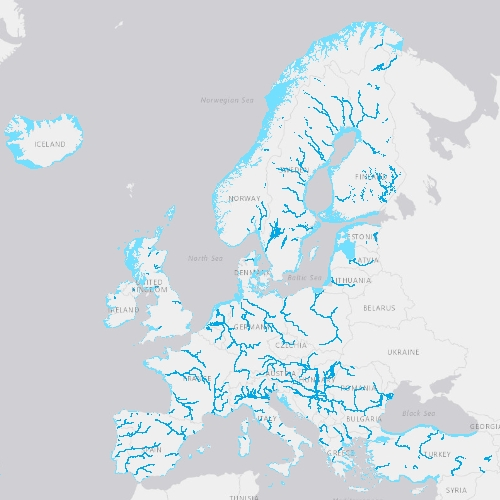
EU-Hydro is a dataset for all EEA38 countries and the United Kingdom providing photo-interpreted river network, consistent of surface interpretation of water bodies (lakes and wide rivers), and a drainage model (also called Drainage Network), derived from EU-DEM, with catchments and drainage lines and nodes. The EU-Hydro dataset is distributed in separate files (river network and drainage network) for each of the 35 major basins of the EEA38 + UK area, in GDB and GPKG formats. The production of EU-Hydro and the derived layers was coordinated by the European Environment Agency in the frame of the EU Copernicus programme.
-
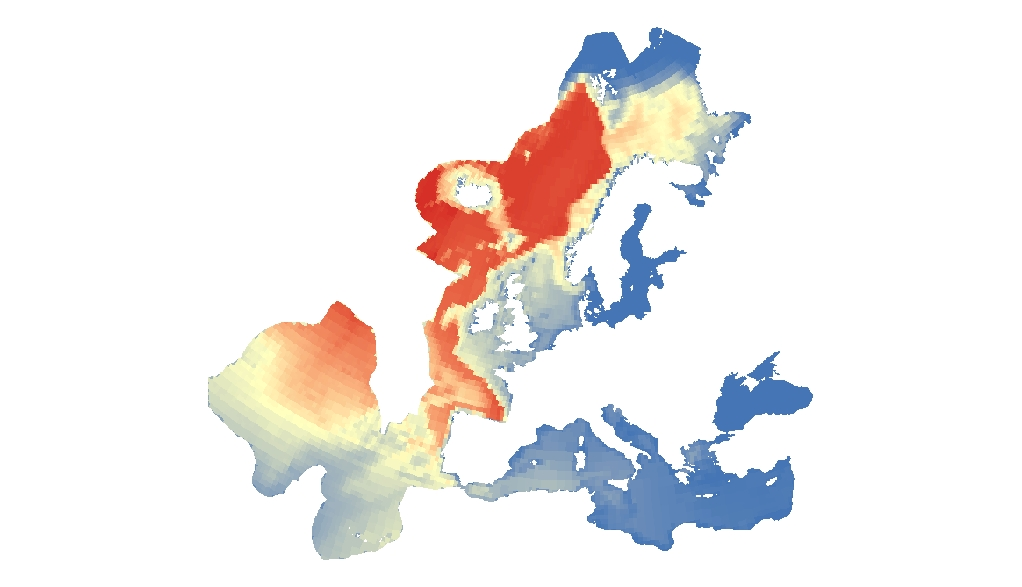
This raster dataset represents the probability of occurrence of whales in the Europe Seas, where the species included are: Blue whale, Sei whale, Humpback whale, Sperm whale, Fin whale and Northern right whale. The northern right whale model only describes the range of the western population of this species, since the eastern population is probably almost extinct. Thus, the northern right whale model only partly overlaps with the EEA area on interest. This dataset is based on AquaMaps distribution maps (version 10/2019). The dataset has been prepared in the context of the development of the first European Maritime Transport Environmental Report (EMSA-EEA report, 2021: https://www.eea.europa.eu/publications/maritime-transport).
-
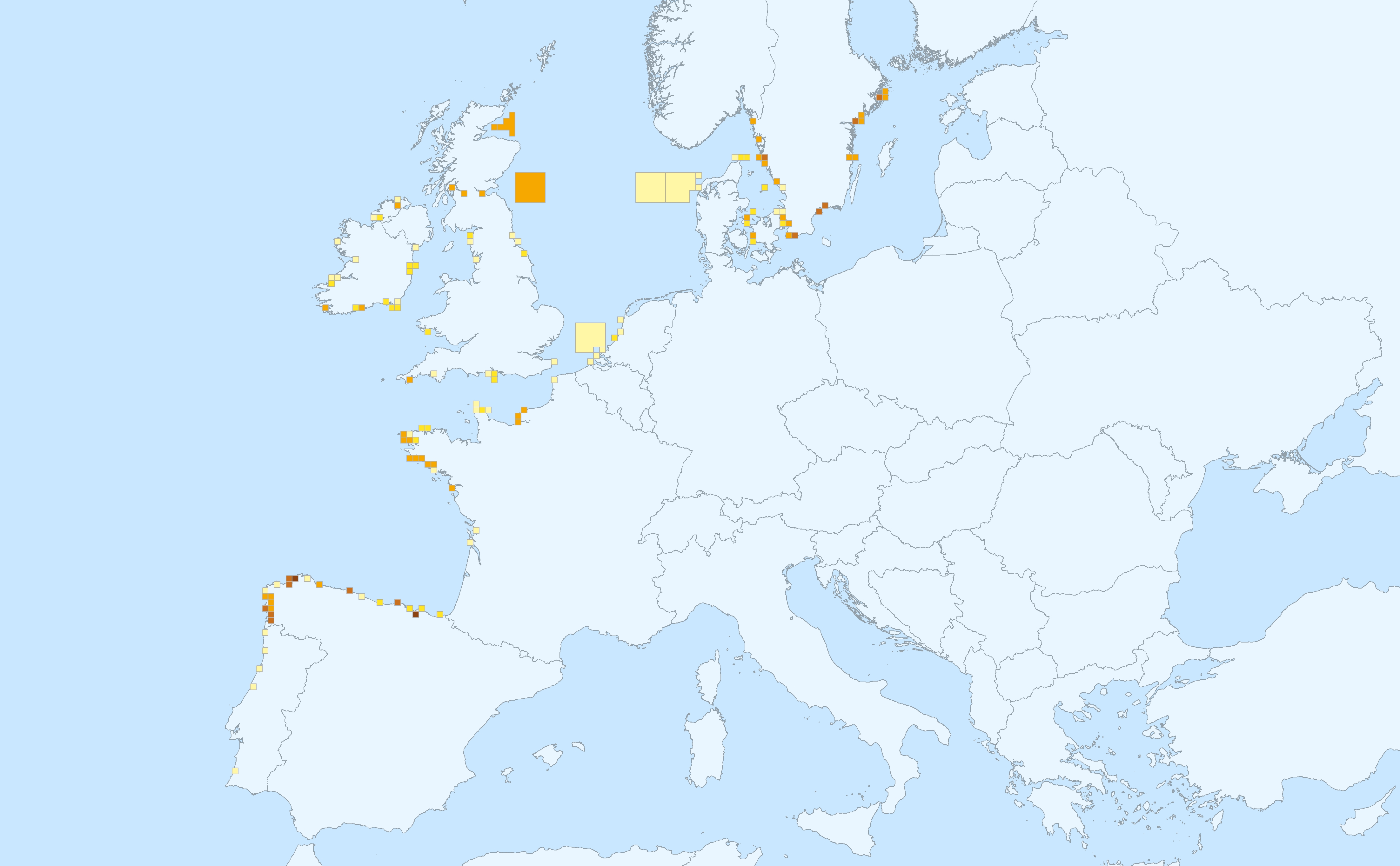
This data set presents the resulting assessment grid (based on the EEA reference grid) with the classification of chemical status of the transitional, coastal and marine waters in the context of the Water Framework Directive (WFD) and the Marine Strategy Framework Directive (MSFD), providing a mapping of contamination 'problem areas' and 'non-problem areas' based on measurements of biological effects. This classification has been performed using the CHASE+ tool, with classifications of the of contaminant status of indicators of biological effects. The status is evaluated in five classes, where NPAhigh and NPAgood are recognised as ‘non-problem areas’ and PAmoderate, PApoor and PAbad are recognised as ‘problem areas’. Monitoring biological effects is restricted to a few indicators (e.g. imposex) and data coverage is currently limited. Biological effects have thus been addressed in only 134 assessment units, mostly in the Baltic Sea, the North Sea and the North-East Atlantic Ocean. This data set underpins the findings and cartographic representations published in the EEA report “Contaminants in Europe’s seas” (No 25/2018). See the mentioned report for further information.
-
Couche polygone, représentant les principaux axes de transport pris en compte dans le cadre du **Plan de Prévention du Bruit dans l'Environnement (PPBE)**. Ces infrastructures constituent des sources potentielles de nuisances sonores et font l'objet d'études visant à évaluer l'exposition des populations au bruit. La couche est utilisée pour l'élaboration des cartes de bruit stratégiques, l'identification des secteurs sensibles et la définition des actions de prévention ou de réduction des nuisances sonores
-
Couche polygone, représentant les zones définies dans le cadre du **Plan de Prévention du Bruit dans l'Environnement (PPBE)** liées à l'activité de l'aéroport. Ces périmètres permettent d'identifier les secteurs potentiellement exposés aux nuisances sonores aériennes et servent à l'évaluation, à la prévention et à la réduction des impacts du bruit sur les populations et l'environnement. La couche constitue un outil d'aide à la décision pour les politiques d'aménagement du territoire, d'urbanisme et de protection des zones sensibles. Les données sont issues des études acoustiques et des documents réglementaires associés au PPBE.
-
Couche polygone, représentant les zones exposées aux nuisances sonores générées par le trafic routier, dans le cadre du Plan de Prévention du Bruit dans l'Environnement (PPBE). Ces périmètres sont établis à partir des cartes stratégiques du bruit et permettent d'identifier les secteurs soumis à des niveaux sonores significatifs liés aux infrastructures routières. Cette donnée est utilisée pour évaluer l'exposition des populations au bruit, orienter les actions de prévention et de réduction des nuisances sonores, et répondre aux obligations réglementaires en matière d'environnement sonore. Les polygones peuvent être associés à différentes classes d'exposition selon les indicateurs acoustiques en vigueur (notamment Lden).