 Catalogue PIGMA
2000
Type of resources
Available actions
Topics
Keywords
Provided by
Years
Formats
Representation types
Update frequencies
status
Scale
Resolution
-
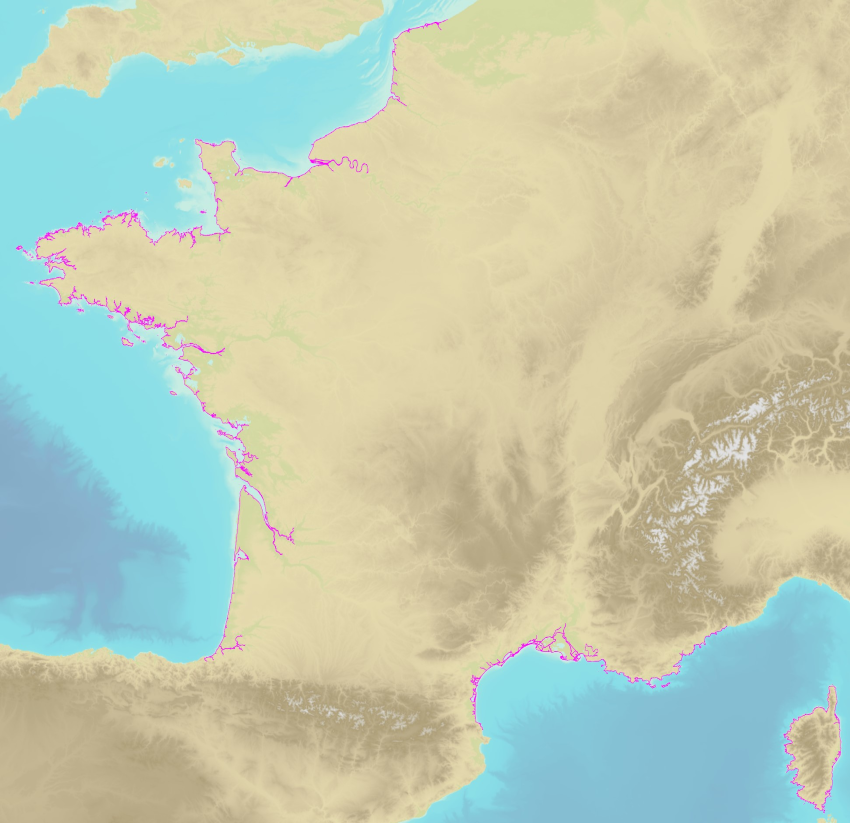
The land-sea limit corresponds to the Highest Astronomical Tide (HAT) in the case of a tide of coefficient 120 and under normal meteorological conditions (no offshore wind and mean atmospheric pressure of 1013 hPa). This geometric line is naturally defined as the intersection of a HAT model (extended to the coast and the top end of the upper estuary) based on the available Bathyelli surfaces, and a high-resolution digital terrain model of the coastal area. It corresponds to the highest limit of the intertidal area and takes into account, when they exist, the 3 administrative maritime limits which are: the transversal limit of the sea (LTM), the salt water limit (LSE) and the limit of maritime jurisdiction (LAM). This limit is measured (quoted) in relation to the local hydrographic chart datum and to the levels of reference for France (IGN69 and IGN78 for Corsica). Relations to other levels of reference (mean sea level and ellipsoid) are known. The land-sea limit product, mainly results from the exploitation of the two products Litto3D®/RGEALTI® and Bathyelli, and represents, with a metric resolution (1 to 5 metres), this theoretical entity by a set of 2D polylines describing the nature of the coast (artificial or natural, rocky or sandy, steep or flat, etc.). The method used for calculating the land-sea limit makes it possible to produce a continuous, homogeneous and spatially coherent limit on the entire French metropolitan coastal area.
-
The land-sea limit corresponds to the Highest Astronomical Tide (HAT) in the case of a tide of coefficient 120 and under normal meteorological conditions (no offshore wind and mean atmospheric pressure of 1013 hPa). This geometric line is naturally defined as the intersection of a HAT model (extended to the coast and the top end of the upper estuary) based on the available Bathyelli surfaces, and a high-resolution digital terrain model of the coastal area. It corresponds to the highest limit of the intertidal area and takes into account, when they exist, the 3 administrative maritime limits which are: the transversal limit of the sea (LTM), the salt water limit (LSE) and the limit of maritime jurisdiction (LAM). This limit is measured (quoted) in relation to the local hydrographic chart datum and to the levels of reference for France (IGN69 and IGN78 for Corsica). Relations to other levels of reference (mean sea level and ellipsoid) are known. The land-sea limit product, mainly results from the exploitation of the two products Litto3D®/RGEALTI® and Bathyelli, and represents, with a metric resolution (1 to 5 metres), this theoretical entity by a set of 2D polylines describing the nature of the coast (artificial or natural, rocky or sandy, steep or flat, etc.). The method used for calculating the land-sea limit makes it possible to produce a continuous, homogeneous and spatially coherent limit on the entire French metropolitan coastal area.
-
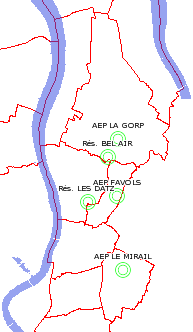
Ce jeu de données signale sous forme de ponctuels la présence d'un ouvrage de type château d'eau, réservoir, ou bâche utilisée pour stocker l'eau destinée à la consommation humaine.
-
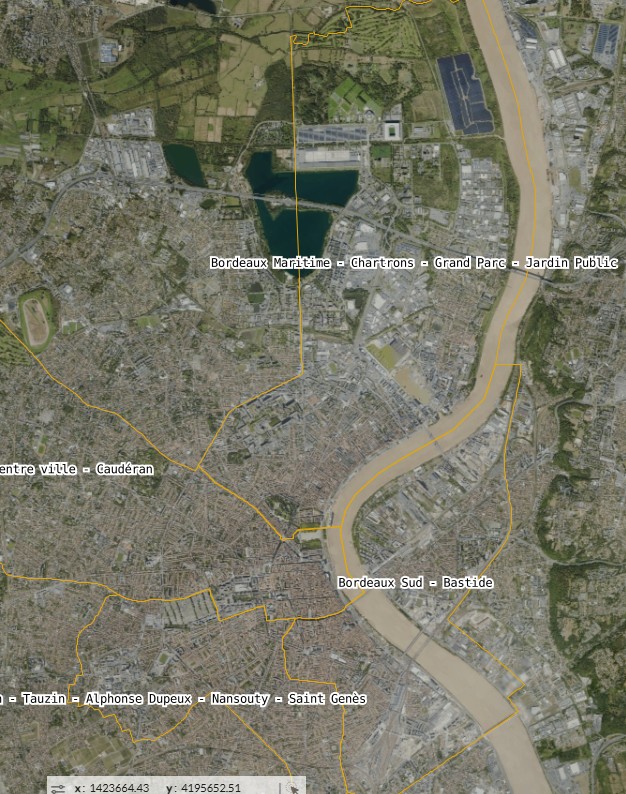
Ce jeu de données représente sous forme surfacique la sectorisation petite enfance du territoire de la ville de Bordeaux
-
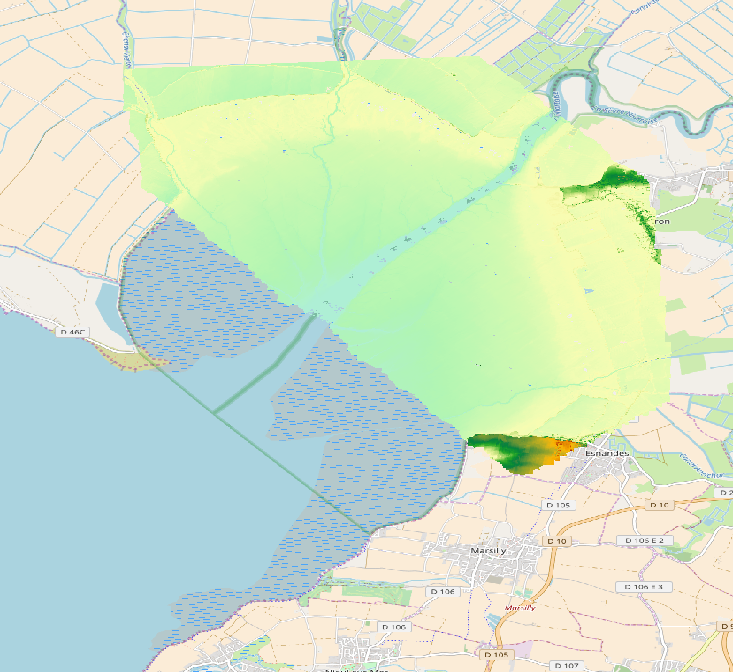
Données de relief acquises par levé au laser aéroporté. La donnée se présente au format Grid ArcInfo. L'altitude est exprimée en mètre (positif vers le zénith) par rapport au référentiel IGN69. Ce MNT est issu de données source de type "last pulse" (i.e. sol, bâtiments, sol sous la végétation), acquises en 2004. La méthode d'interpolation employée est le krigeage.
-
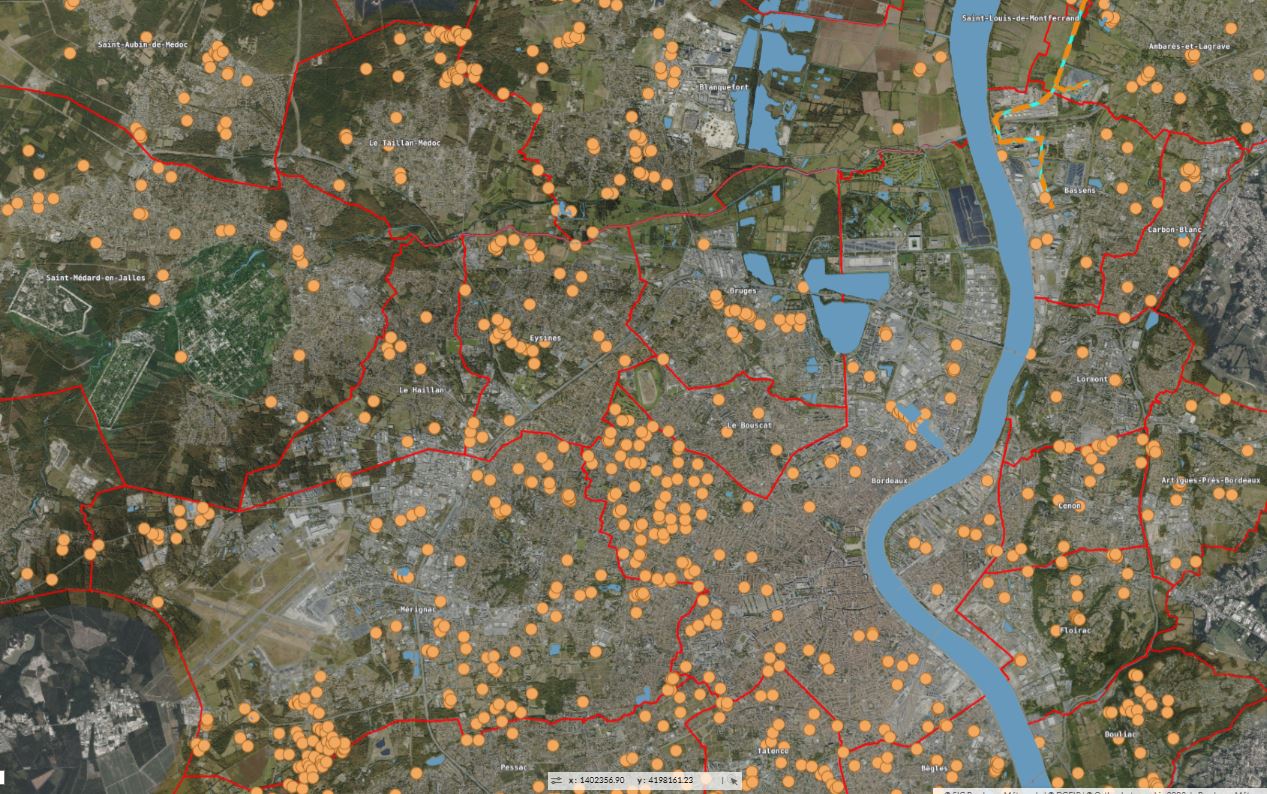
Ce jeu de données ponctuels caractérise la capacité du sol à infiltrer. Ce jeu de données résulte de l'agrégat de différentes sources qui répertorient les ouvrages souterrains sur le territoire de Bordeaux Métropole. Il donne à voir les grandes tendances des facteurs d'infiltration à l'échelle de la Métropole. Il n'engage en rien la responsabilité de Bordeaux Métropole.
-
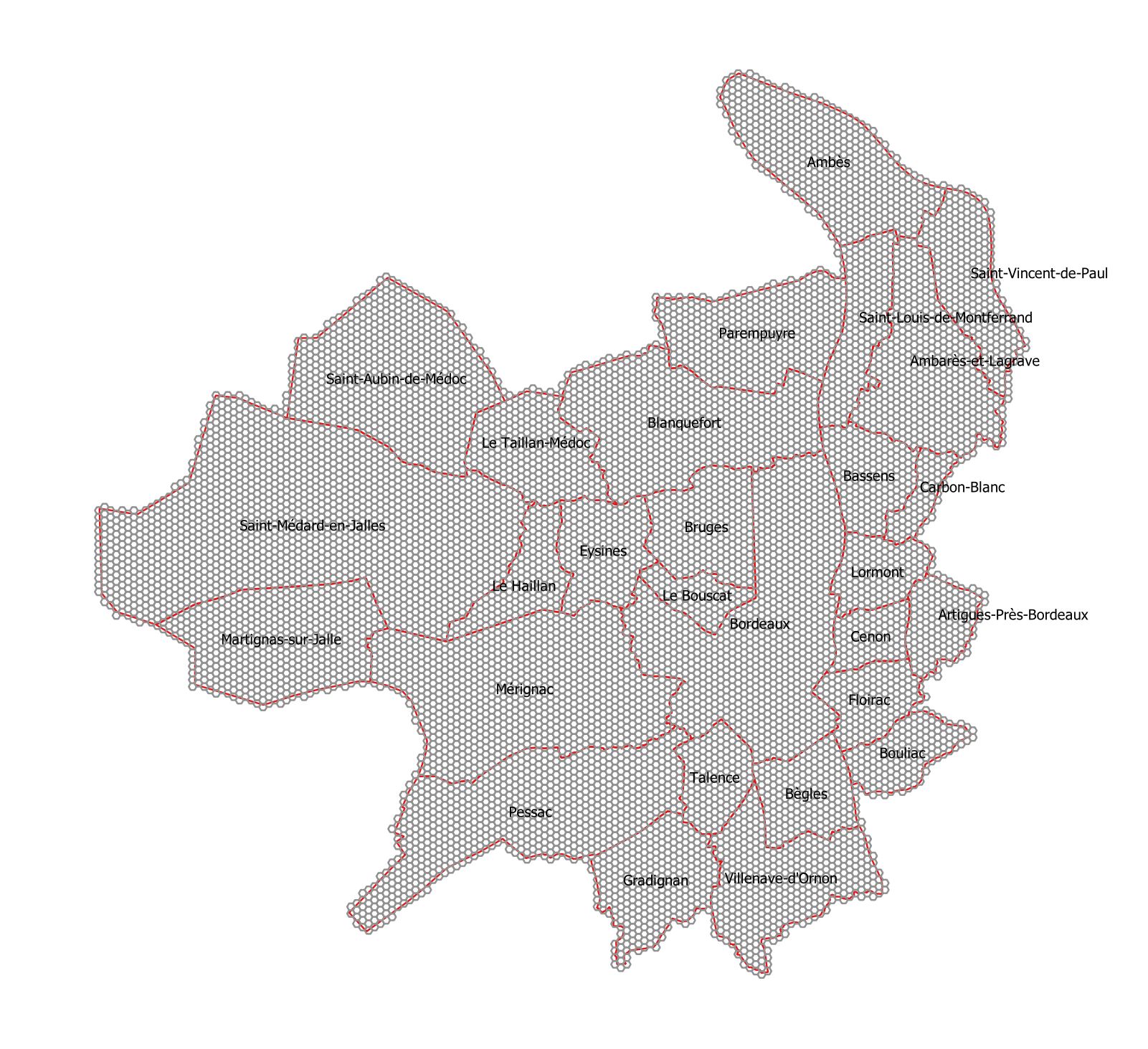
Ce jeu de données est une représentation uniforme de territoire de Bordeaux Métropole par mailles hexagonales de 250 mètre (espacement horizontal et vertical), mobilisable pour la production d'indicateurs territoriaux.
-
Surface des communes littorales entre 2000-2009
-
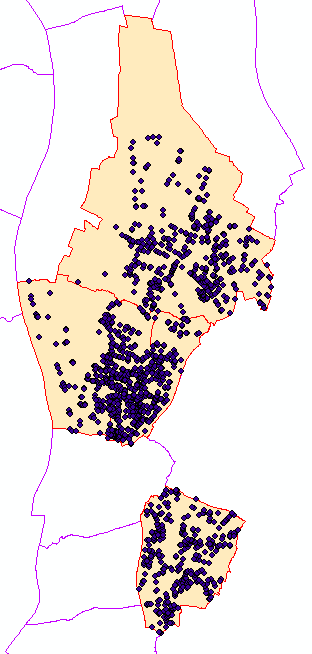
Ce jeu de données représente sous forme de ponctuels les dispositifs destinés à compenser les déséquilibres (pression, débit, niveau d'eau et de l'air) au sein du réseau de canalisations.
-
Réseau d'eau potable (canalisations et ouvrages de défense incendie) du syndicat intercommunal d'alimentation en eau potable et d'assainissement (SIAEPA) de Saint Selve (communes de Saint-Selve, Saint-Morillon, Saint-Michel-de-Rieufret)