 Catalogue PIGMA
/Observational data/satellite
Type of resources
Available actions
Topics
Keywords
Contact for the resource
Provided by
Years
Formats
Representation types
Update frequencies
status
Scale
Resolution
-

The mean sea surface (MSS) is an important field in physical oceanography, geophysics, and geodesy. In principle, it corresponds to the time-averaged height of the ocean surface. Auxiliary product : mean sea profile above a reference ellipsoid (T/P or WSG84). This surface is available on a regular grid (1/60°x1/60°, 1 minute). The mean sea surface MSS_CNES_CLS2025 (Charayon et al., in prep) has been computed using a 29-year [1993-2021] period of altimetric data. It was built exploring the use of SWOT KaRIn data to propose a new generation MSS able to better represent small wavelengths gapping state-of-the-art nadir-based MSS. Long wavelengths come from a MSS draft chosen to be the Hybrid 23 MSS (https://doi.org/10.24400/527896/a01-2024.002 ) low pass filtered at 20km since this nadir-based MSS model already captured well long wavelengths. The wavelengths shorter than 100km are improved thanks to a SWOT-KaRIn mean profile anomaly to the MSS draft. This mean profile anomaly is built with: - The SWOT-KaRIn science (L3 v3.0 Expert, cycles 1 to 31 included except cycle 17, https://doi.org/10.24400/527896/a01-2023.018) dataset - The experimental multimission gridded L4 sea level heights and velocities with SWOT using MIOST (https://doi.org/10.24400/527896/a01-2025.001 ). - In SWOT diamonds, since KaRIn data are not available, we used another innovation only based on DT2024 1Hz CryoSat2 and AltiKa SSHA data (https://doi.org/10.48670/moi-00146), period from 2010 to 2025, SSHA data relative to MSS Hybrid 23 low pass filtered at 5km. To build this nadir-based innovation, we used the static part of the mapping from MIOST method.
-

These gridded products are produced from the following upstream data: - for satellites SARAL/AltiKa, Cryosat-2, HaiYang-2B, Jason-3, Copernicus Sentinel-3A/B, Sentinel-6 MF, SWOT Nadir => NRT (Near-Real-Time) Nadir along-track (or Level-3) SEA LEVEL products (DOI: https://doi.org/10.48670/moi-00147) delivered by the Copernicus Marine Service (http://marine.copernicus.eu/ ). The gridded product is based on near-real-time (NRT) Level-3 Nadir datasets for the period from July 7, 2025, to December 31, 2025. => MY (Multi-Year) Nadir along-track (or Level-3) SEA LEVEL products (DOI: https://doi.org/10.48670/moi-00146 ) delivered by the Copernicus Marine Service (CMEMS, http://marine.copernicus.eu/ ). The gridded product is based on MY Level-3 Nadir datasets for the period from March 28, 2023, to July 6, 2025. - for SWOT KaRIn : the L3_LR_SSH Expert v3.0 product distributed by AVISO (DOI: https://doi.org/10.24400/527896/A01-2023.018) from March 28, 2023 to December 31, 2025. One mapping algorithm is proposed: the MIOST approach which provides which provides global Sea Surface Height (SSH) solutions. The MIOST method is capable of accounting for various modes of ocean surface topography variability (e.g., geostrophic, barotropic, equatorial wave dynamics) by constructing multiple independent components within a predefined covariance model.
-

This dataset provides an estimation of the climate feedback parameter and the climate sensitivity developed in collaboration by Magellium and LEGOS. It is based on the publication of Meyssignac et al., (2023, https://doi.org/10.1038/s43247-023-00887-2) . The product is a crucial study on Effective Climate Sensitivity (ECS), focusing on the time variation of the climate feedback parameter (λ). Understanding λ is fundamental as it quantifies the Earth’s radiative response to changes in global average temperature. A less negative λ directly implies a greater climate sensitivity to greenhouse gas concentrations. The product addresses the high uncertainty in ECS by providing an observational estimate of λ temporal variations since 1970. Estimates are derived from the global energy balance equation, regressing the radiative response against temperature over periods longer than 25 years. Users are primarily interested in the time series of λ and its associated uncertainties. The input data for computing λ is provided in a secondary "extended product" for transparency, allowing users to rebuild the indicators. The final product, available as a NetCDF file, can be downloaded in open access and is licensed for any project or study.
-

Barystatic and manometric sea level changes represent the mass component of sea level changes at global and regional scales, respectively. Barystatic and manometric sea level changes are estimated using the satellite gravimetry measurements from the GRACE and GRACE-FO missions. Barystatic sea level changes are due to freshwater exchanges with the continents, including ice mass changes from Greenland, Antarctica and continental glaciers, as well as freshwater fluxes from continental areas (i.e. large river basins such as the Amazon or Mississippi). Manometric sea level changes are due to several processes, including the atmosphere - ocean circulation, sea level fingerprints or global water cycle. Climate modes, such as the El Nino Southern Oscillation, Arctic Oscillation, North Atlantic Oscillation or Southern Annular Mode, have also been shown to significantly influence manometric sea level variations (e.g., Pfeffer et al., 2022; https://doi.org/10.1007/s00382-021-05953-z). Two products are distributed: - Barystatic sea level changes from satellite gravimetry with uncertainties at 1-sigma: monthly time series, - Manometric sea level changes from satellite gravimetry with uncertainties at 1-sigma: monthly grids with 1x1 degree. The GRACE and GRACE Follow-On missions monitor the time-variations in the gravity field almost continuously since 2002. Numerous centers distribute time-lapse solutions of the Earth’s gravitational potential, delivered as Stokes coefficients, known as Level-2 solutions. The Level-2 solutions need to be corrected for several geophysical effects and instrumental errors, converted into surface mass anomalies and projected onto the ellipsoid. The resulting gridded surface mass anomalies with appropriate corrections applied are referred to as Level-3 solutions. Several sources of errors affect the solutions of Level-2 and-3, imposed by the satellite configuration, instrumental errors and uncertainties in the geophysical corrections used to process the measurements. We use the ensemble approach of Blazquez et al., (2018; https://doi.org/10.1093/gji/ggy293), to robustly estimate the manometric and barystatic sea level changes and their uncertainties.
-
Along-track altimetric GDR (Geophysical Data Record) products , geophysical and environmental corrections to apply. Available missions are: GFO, Topex/Poseidon, Envisat, Cryosat-2, Jason-1, Jason-2, Jason-3, Saral/AltiKa. Missions with several successive orbital types are treated in their entirety. Compared to the original version of the GDR files distributed by the CNES, ESA, NASA and ISRO agencies, the CTOH proposes new corrections and parameters in these files, which are to be applied to the initial altimetry measurement, according to user needs. Children metadata files are available for each mission.
-

Composite maps of sargassum detection index NFAI (Normalized Floating Algae Index). Daily gridded products provided in delayed time from February 2022 to a month before current date, made available as part of SeSaM SCO project (https://www.spaceclimateobservatory.org/sesam). Each map represents the sargassum presence (through normalized floatting alguae index) of the last 7 days at 0.01° resolution.
-
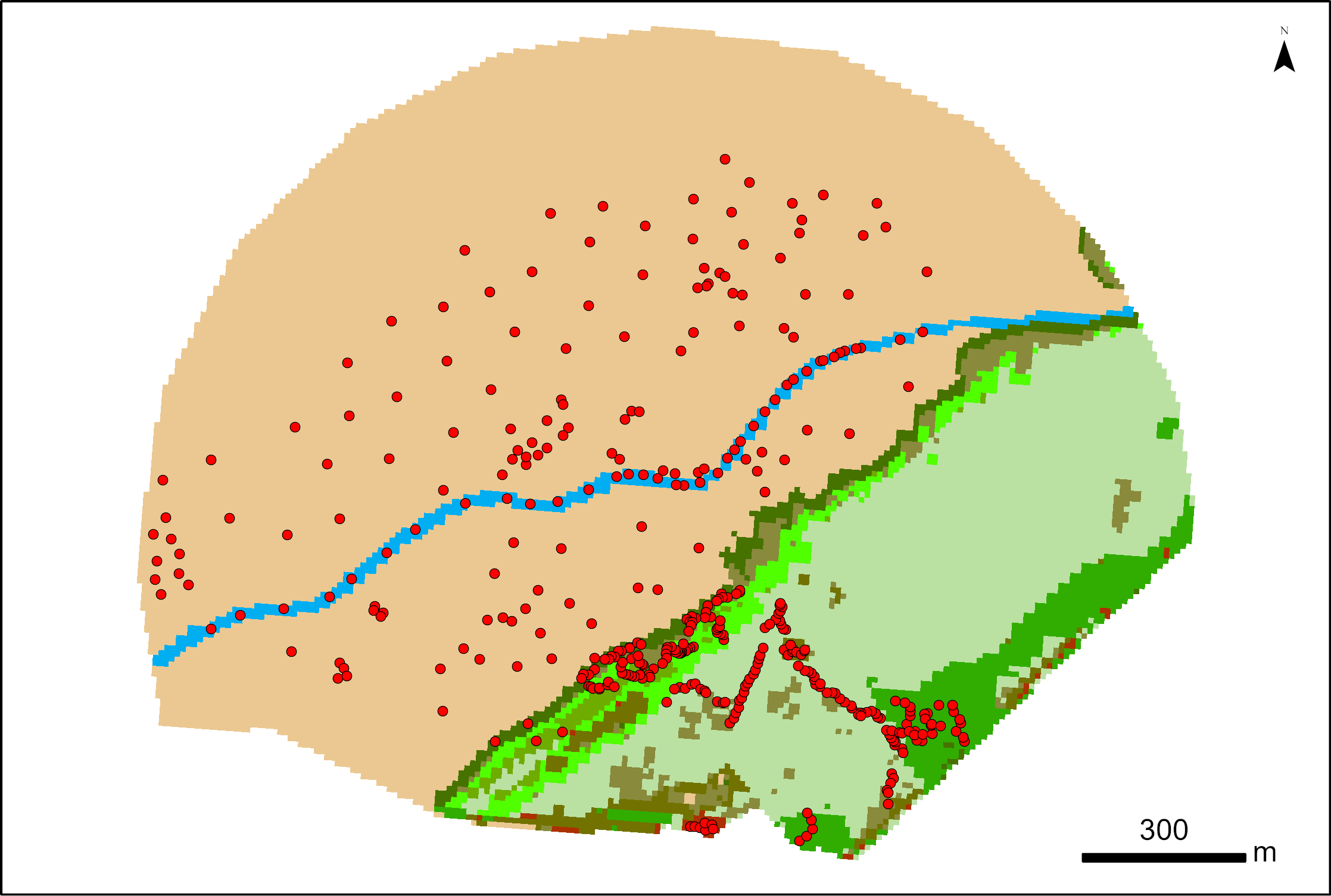
387 points were surveyed with a SP80 DGPS by Maxime Paschal as part of the La Rochelle Zero Carbon Territory (LRTZC) project on 26/05/23. At each point, the type of vegetation was specified.
-

Composite maps of sargassum detection index NFAI (Normalized Floating Algae Index). Daily gridded products provided in delayed time from December 2020 to a month before current date, made available as part of SeSaM SCO project (https://www.spaceclimateobservatory.org/sesam) . Each map represents the sargassum presence (through normalized floatting alguae index) at 0.0025° (high) or 0.01° (low) resolutions.
-

Barystatic and manometric sea level changes represent the mass component of sea level changes at global and regional scales, respectively. Barystatic sea level changes are estimated using the sea level budget (SLB) approach combining satellite altimetry with in-situ measurements of the seawater temperature and salinity. This SLB approach is adapted from Barnoud et al., (2023; https://doi.org/10.5194/os-19-321-2023). Manometric sea level variations and their uncertainties are not provided for the SLB approach, due to the high uncertainties associated with the drift of the halosteric component (e.g., Bouih et al., 2025; https://doi.org/10.5194/egusphere-egu24-16813).
-
Archive de toutes les données de température de surface (SST) satellite produites dans le cadre du projet international GHRSST. Ifremer est un GDAC pour ces données, miroir du GDAC NASA/JPL. Ces données sont utilisées pour la génération de produits multi-capteurs (CMEMS, Medspiration) mais également dans le cadre d'un grand nombre d'études ou projets nécessitant l'utilisation de mesures de SST. L'archive regroupe plusieurs jeux de données provenant de différents satellite ainsi que des données in situ de référence pour leur validation. Elle est mise à jour en temps quasi-réel depuis 10 ans, avec service de diffusion opérationnelle associé (FTP et HTTP). Une fiche sextant (issue du catalogue CERSAT) sera fournie pour chaque dataset dans cette archive.